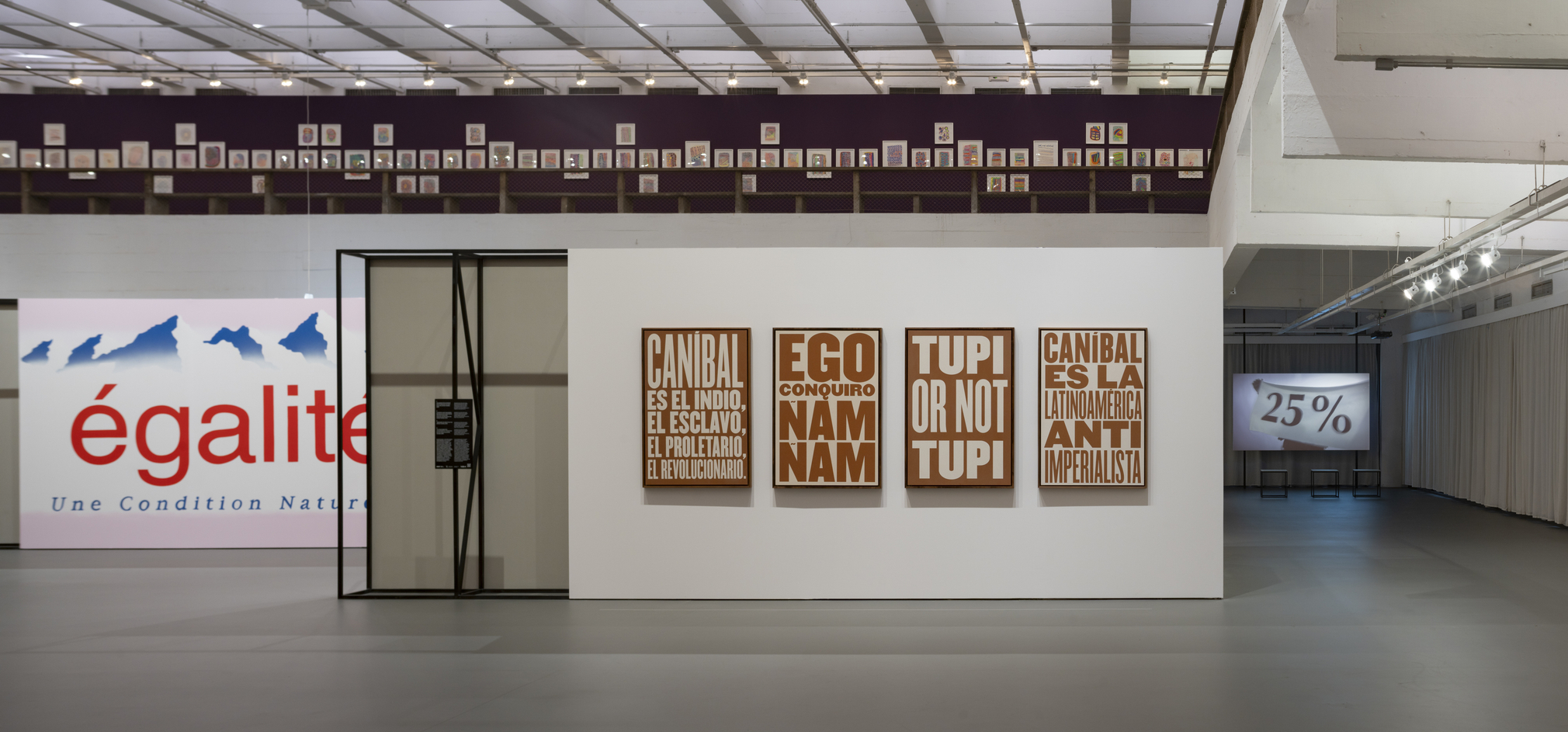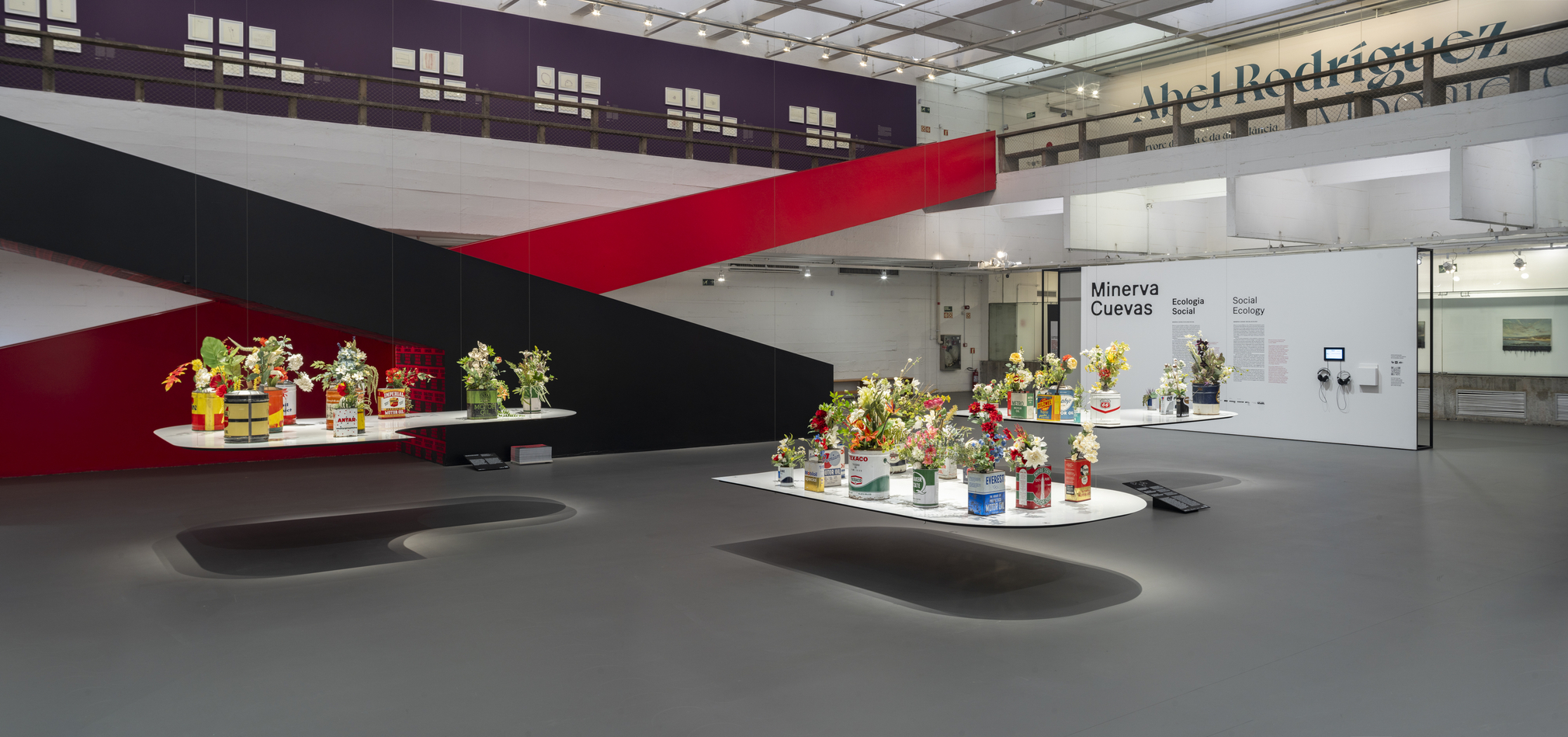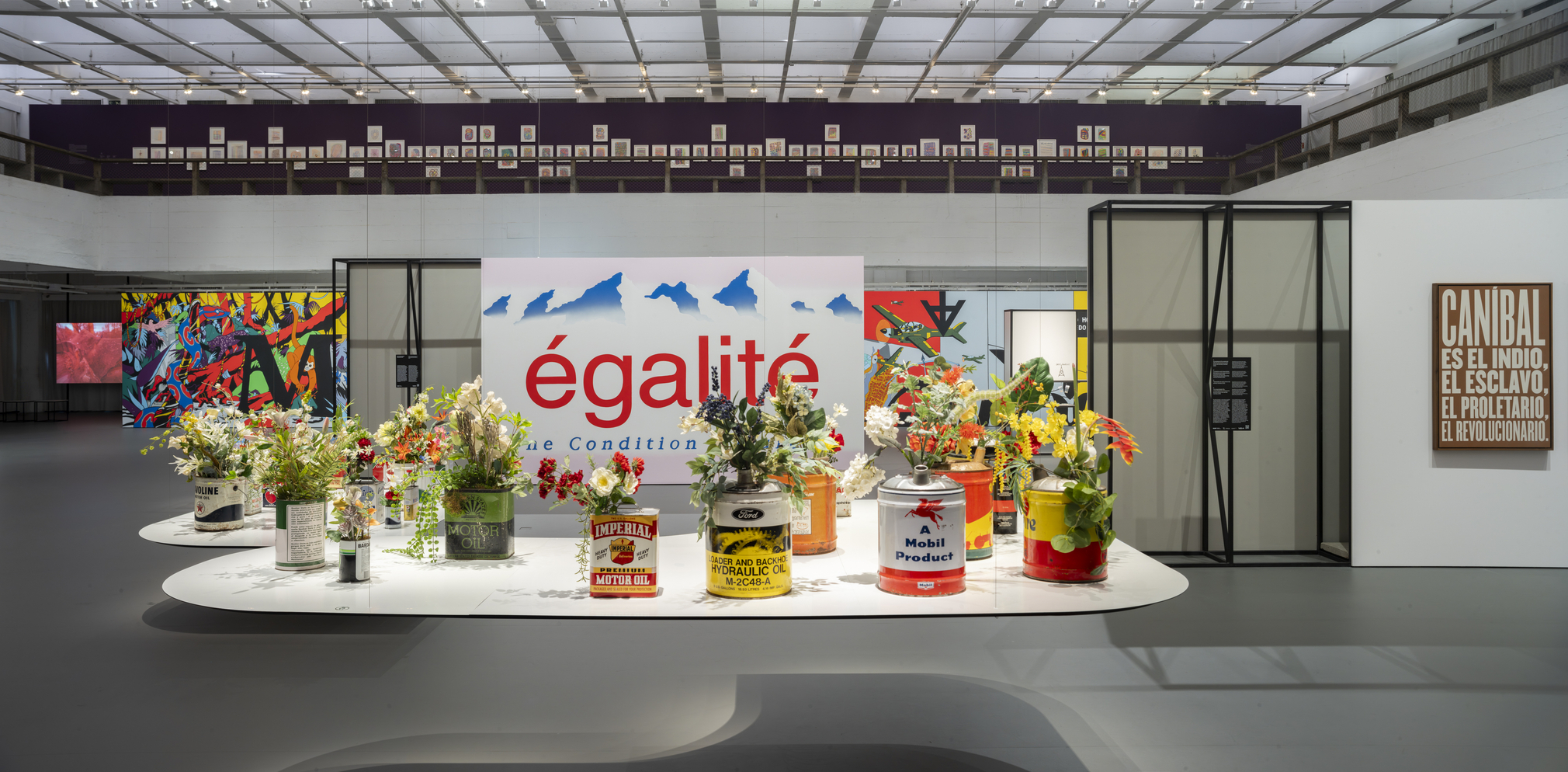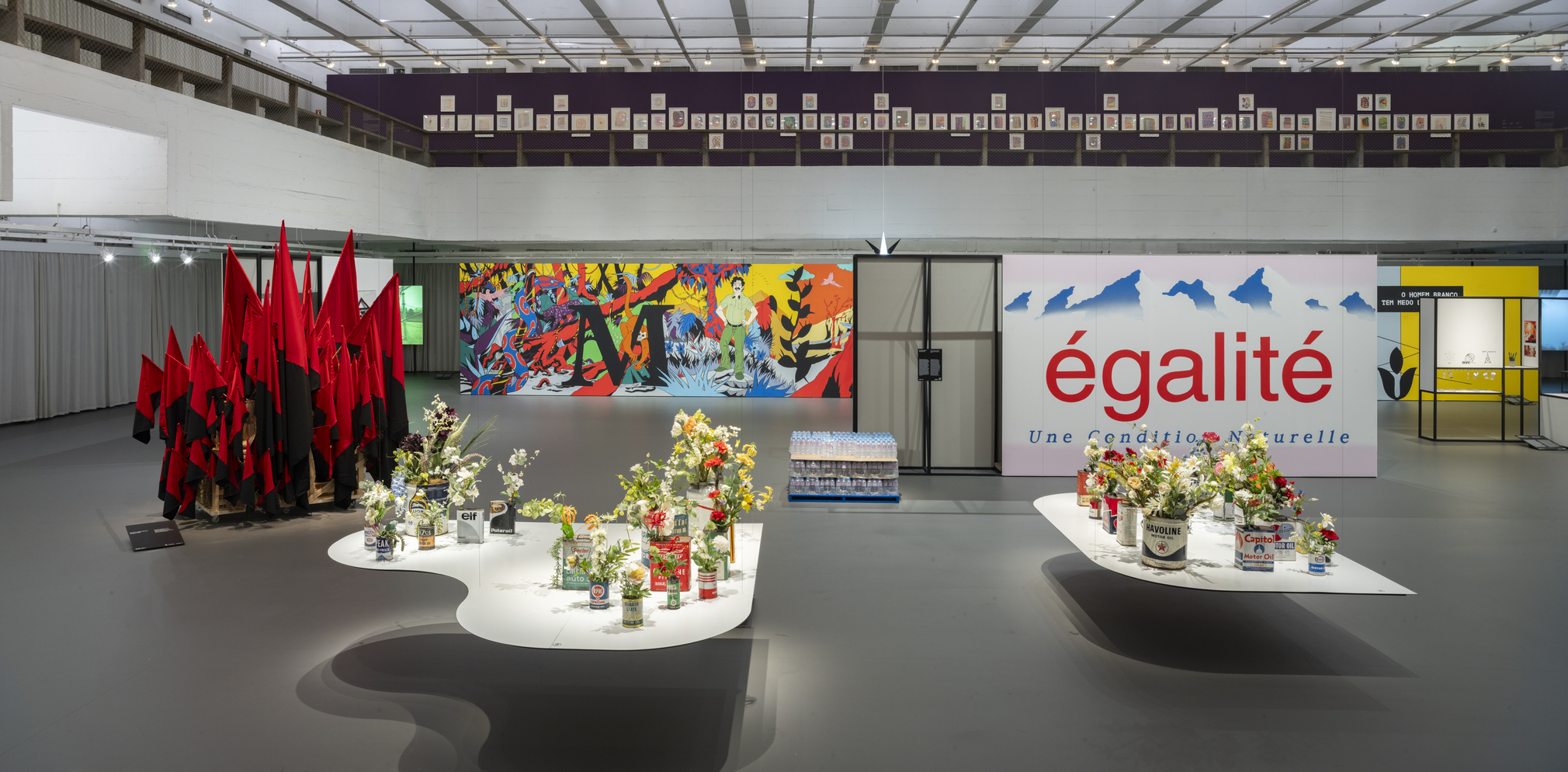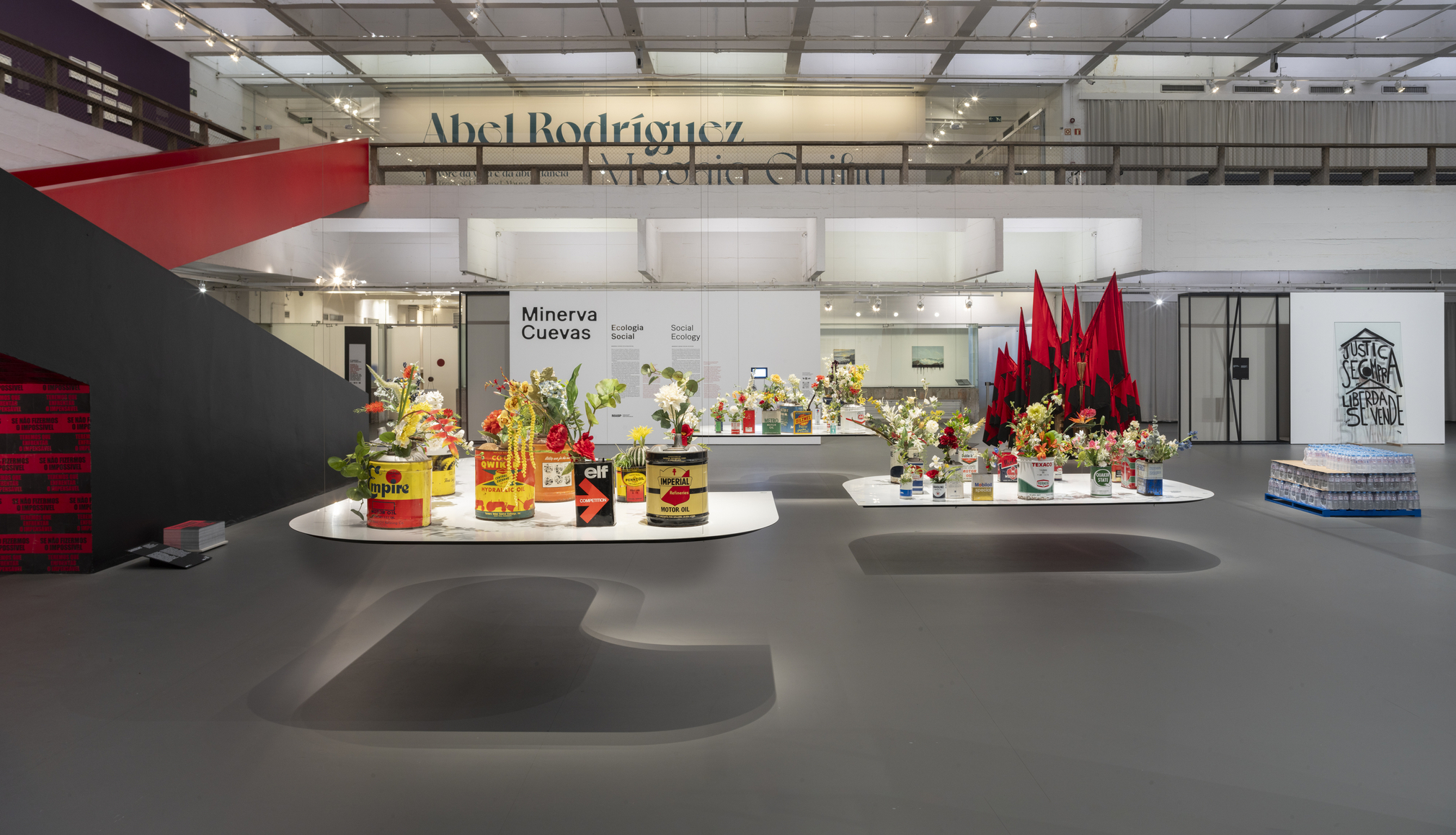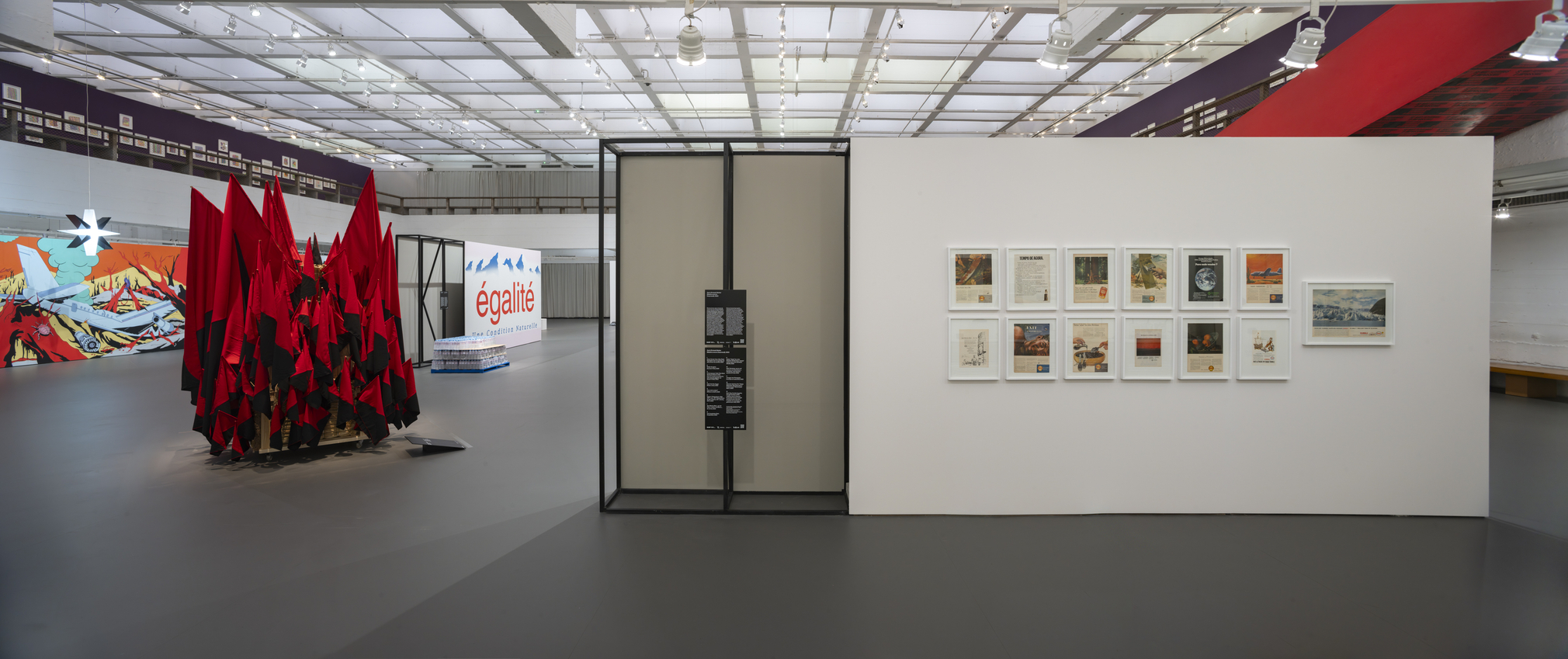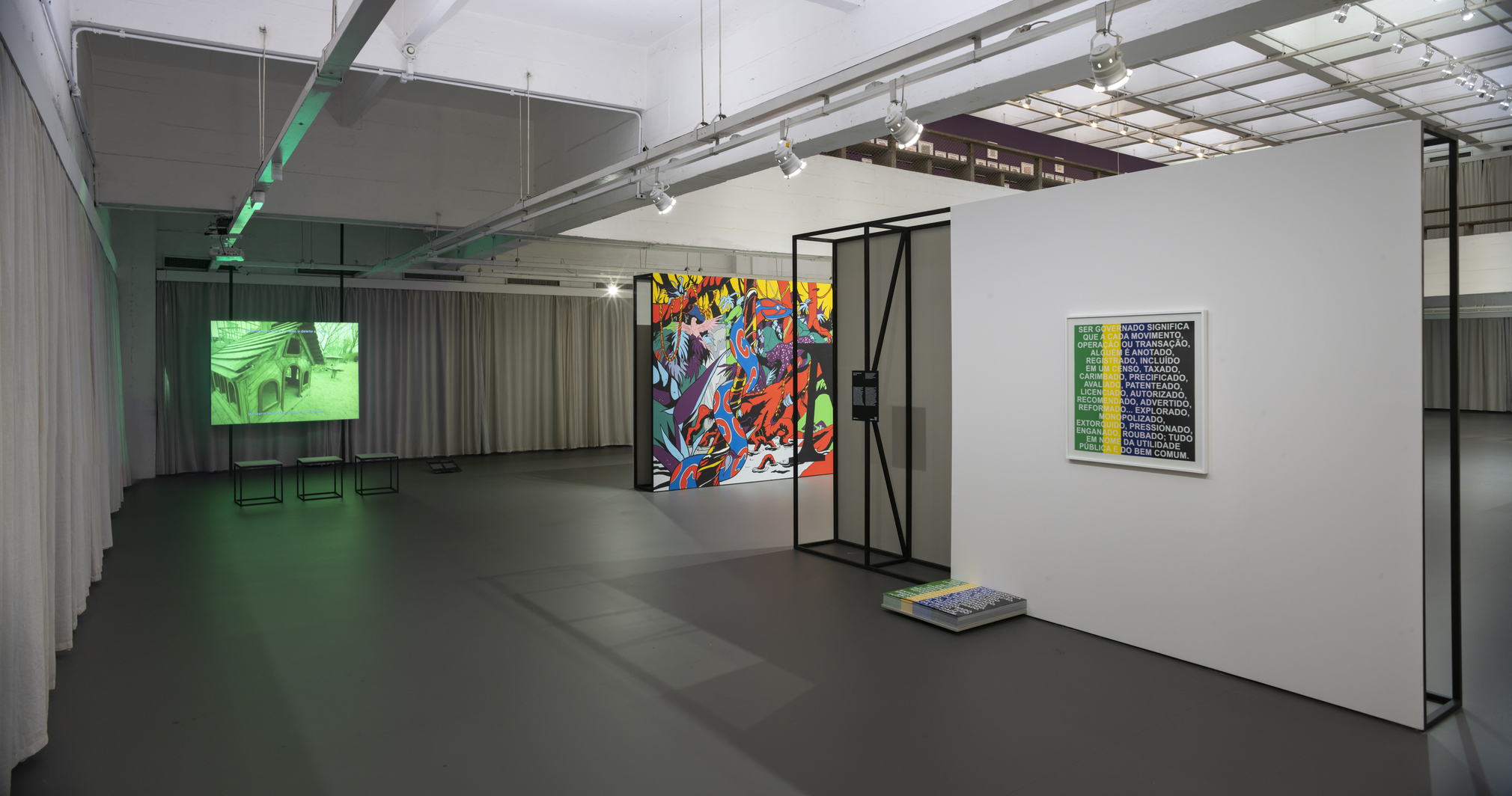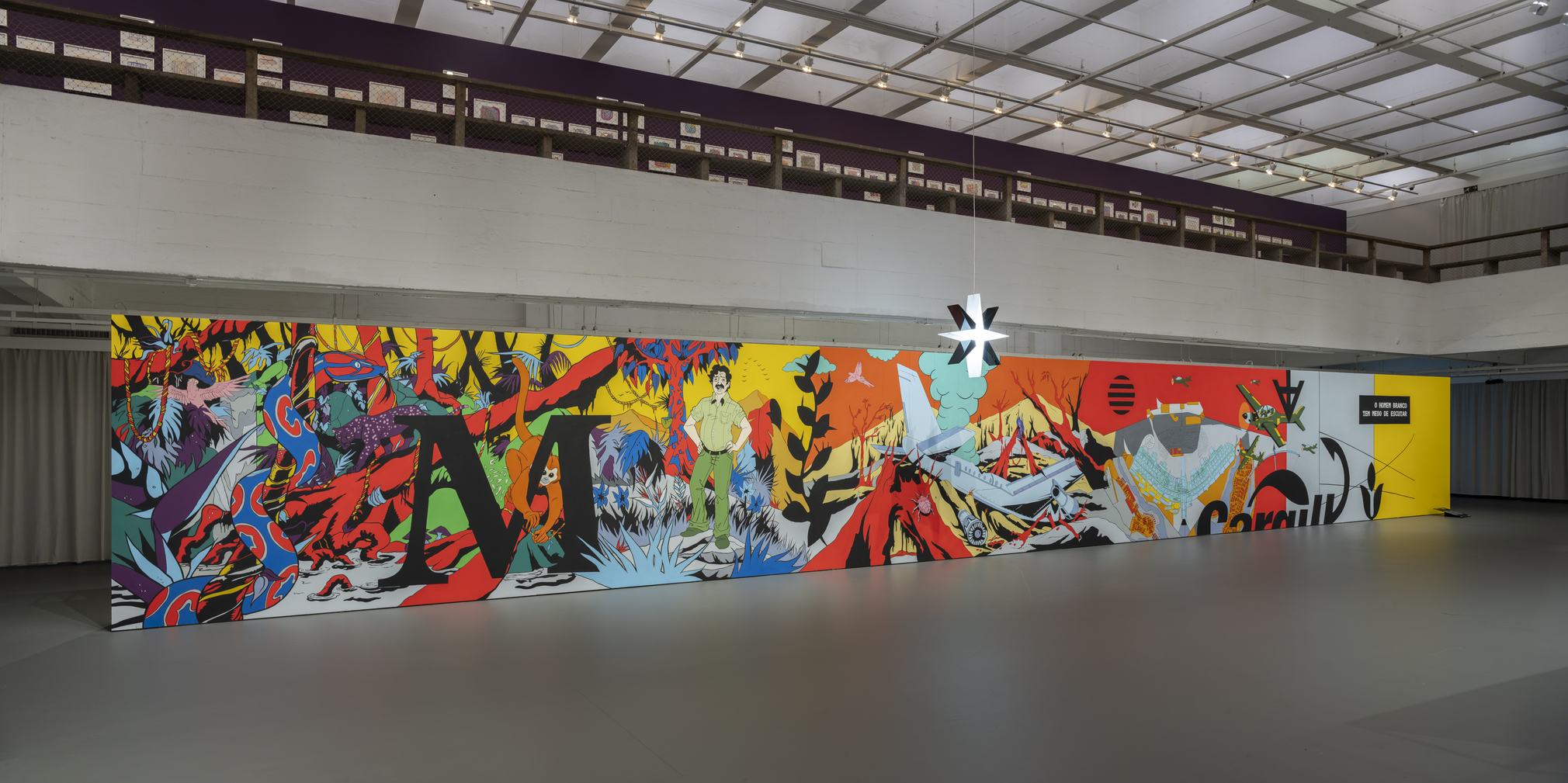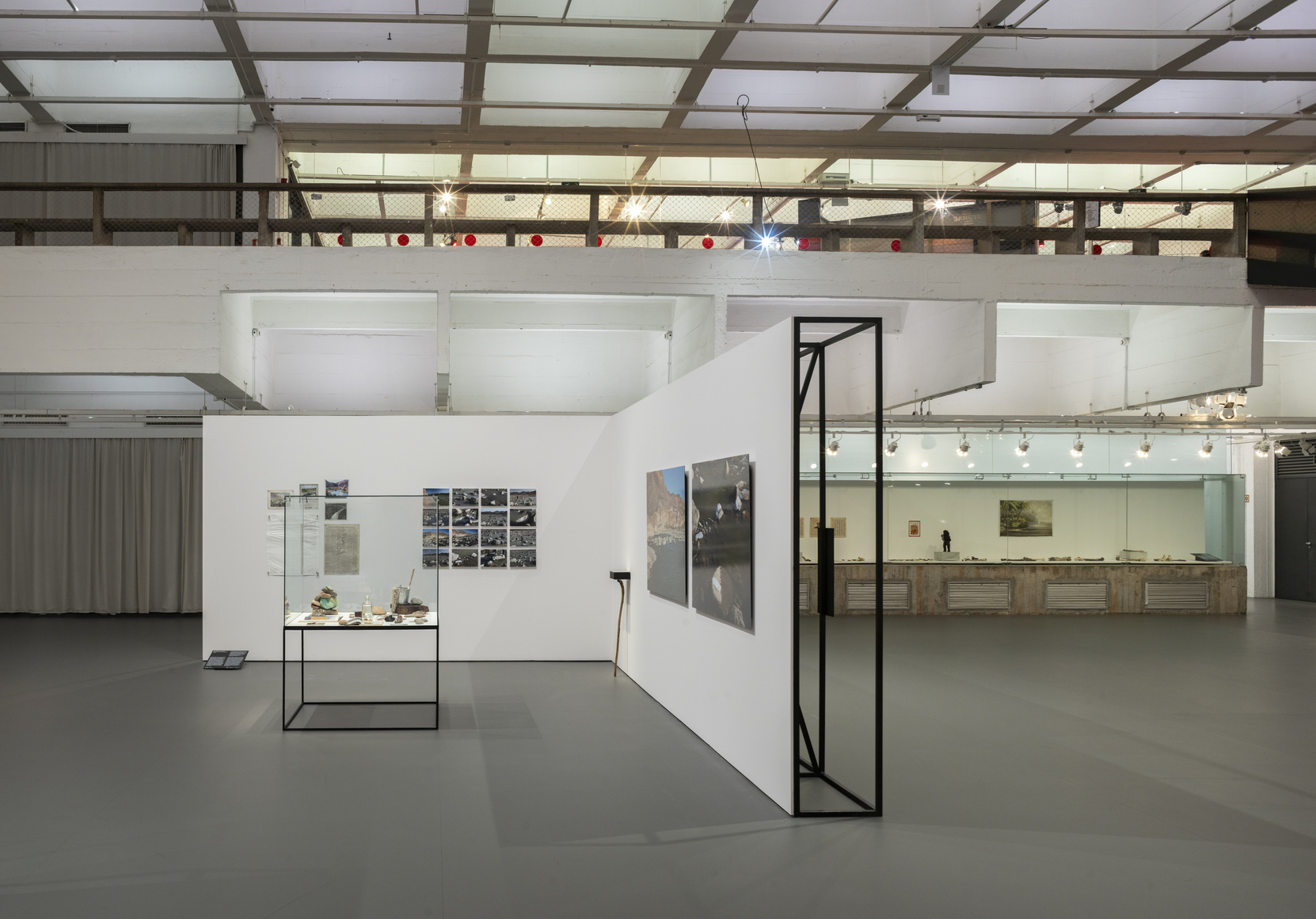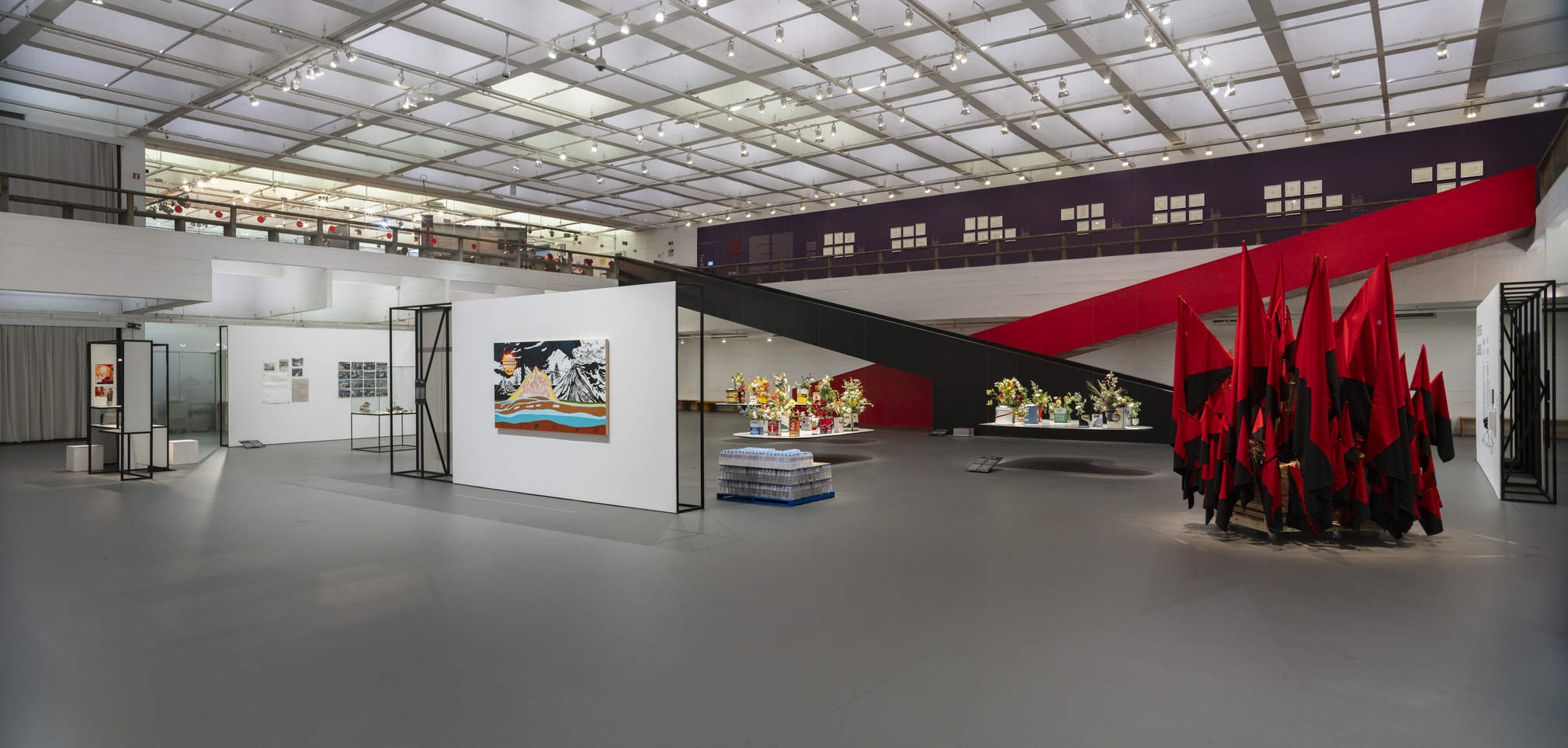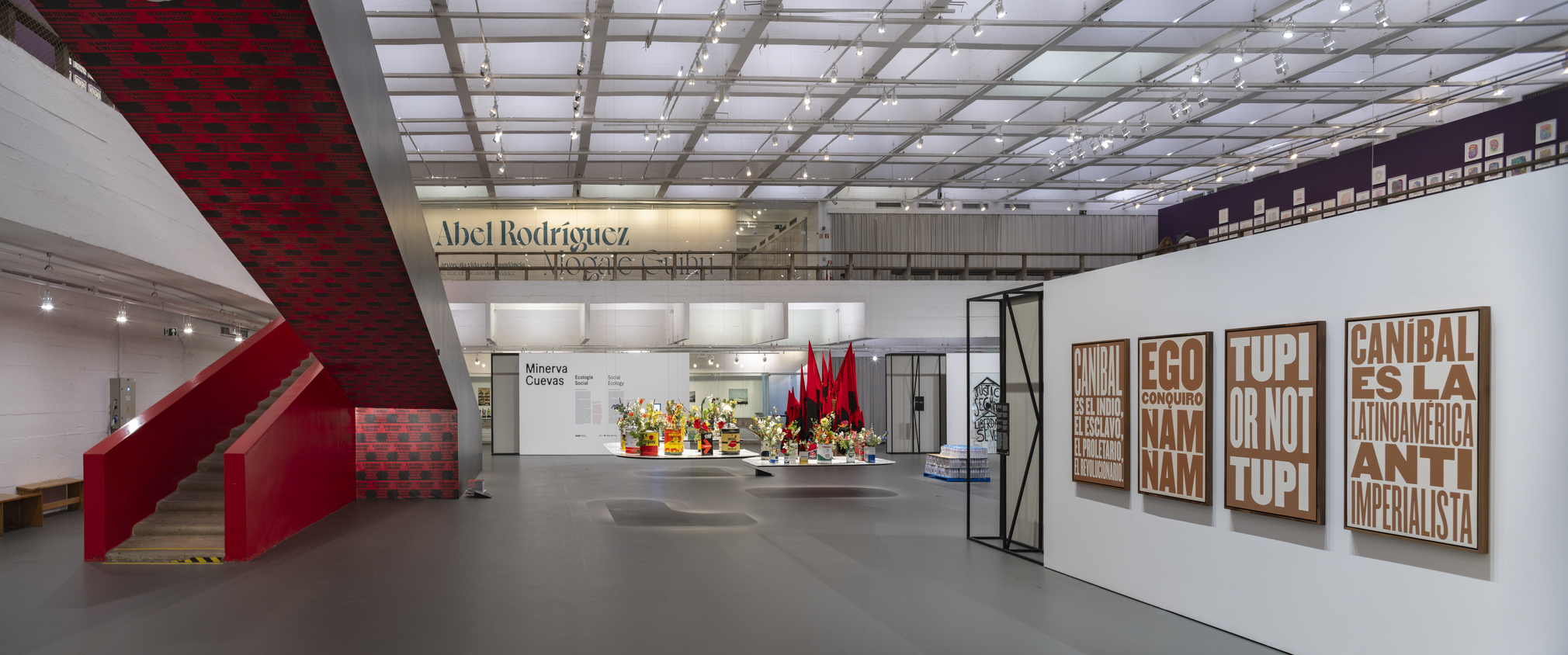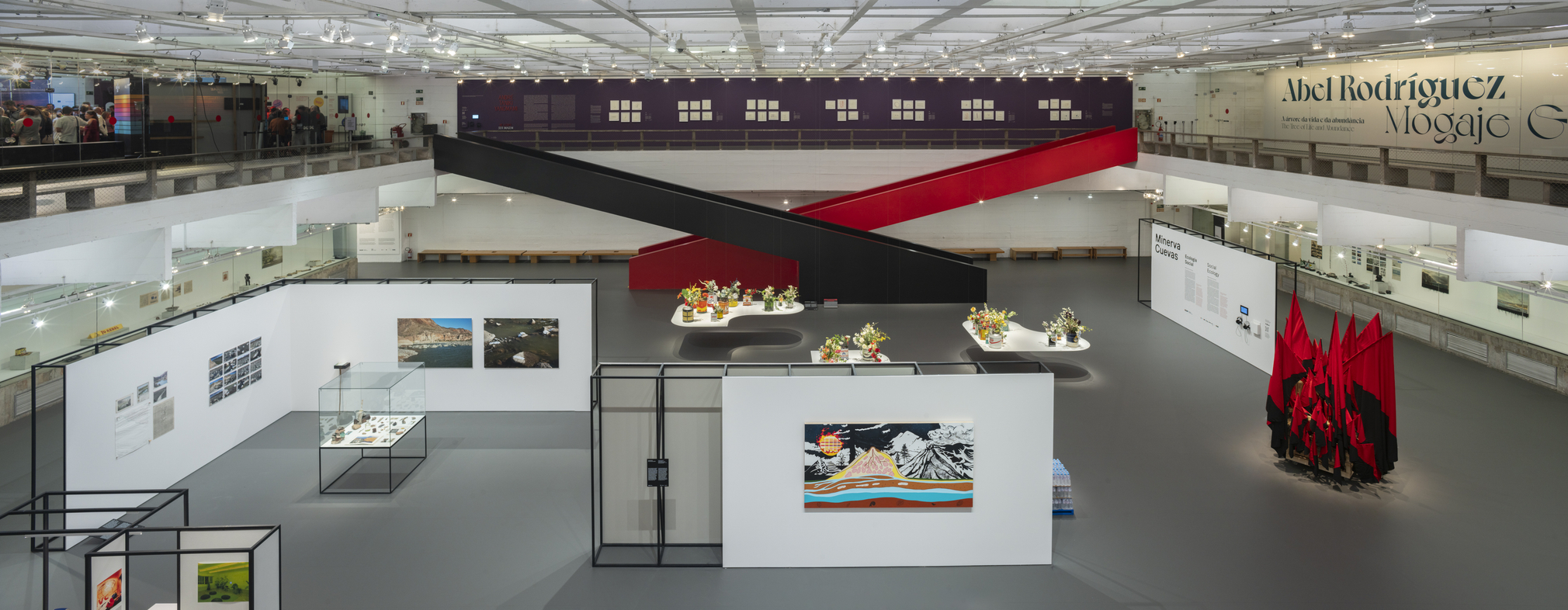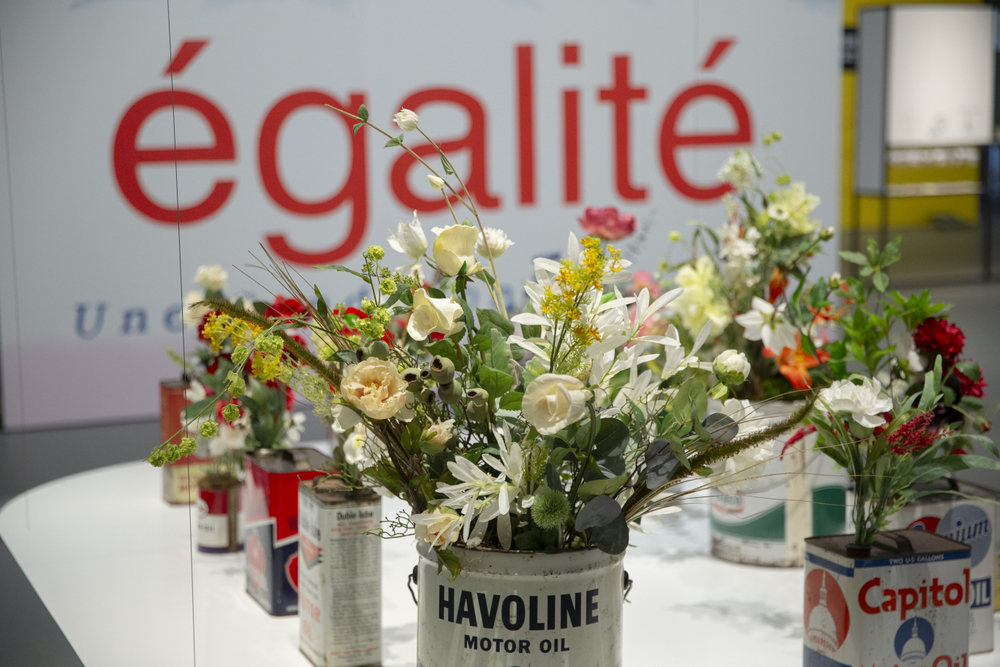
Minerva Cuevas presents Social Ecology at the MASP, São Paulo. The artist has developed an artistic practice that explores the social, economic and political dimensions of ecology, questioning how power dynamics shape the relationships between humans and non-humans. Pursuing an archeology of the present, Cuevas often reworks and appropriates logos, advertisements, and slogans from major corporations to examine issues of ownership and allow us to visualize major economic forces.
The artworks included in the exhibition, collectively articulate the notion of “social ecology,” a concept that was formulated by the anarchist philosopher Murray Bookchin (1921–2006), and which lends its name to this show. For Bookchin, the environmental crisis is inseparable from human hierarchies and inequalities; only a free and cooperative society can restore ecological balance. This perspective runs through Cuevas’s work, which proposes a critical analysis of corporate and neoliberal systems, prompting debates on resource extraction, the forced displacement of migrant populations, and the environmental devastation caused by industry worldwide.
One of Cueva’s long-term and most recognized projects in this exhibition is Mejor Vida Corp. [Better Life Corp.] (1998–present), a non-profit corporation created by the artist to—as its slogan states—provide a “a human interface” and connect us with a structure of public interventions and the distribution of free products and services. This initiative subverts systems of value —corporate, commercial, ethical, social, and cultural—, and suggests forms of redistribution, exchange, and what the artist calls “micro-sabotage.”
Other works in the exhibition address the petroleum industry’s history and its impact on the territory and non-human lives. Many of these works, including paintings and sculptures, employ chapopote (tar)—a petroleum derivative—evoking both the substance’s use in pre-Hispanic ceremonies and the scars of extractivism, revealing that ecology is not separate from the social realm, but rather a site from which diverse social struggles and collective actions emerge.
.
installation view of minerva cuevas: social ecology, museu de arte de são paulo (masp), são paulo, 2025. photo: eduardo ortega
installation view of minerva cuevas: social ecology, museu de arte de são paulo (masp), são paulo, 2025. photo: eduardo ortega
installation view of minerva cuevas: social ecology, museu de arte de são paulo (masp), são paulo, 2025. photo: eduardo ortega
installation view of minerva cuevas: social ecology, museu de arte de são paulo (masp), são paulo, 2025. photo: eduardo ortega
installation view of minerva cuevas: social ecology, museu de arte de são paulo (masp), são paulo, 2025. photo: eduardo ortega
installation view of minerva cuevas: social ecology, museu de arte de são paulo (masp), são paulo, 2025. photo: eduardo ortega
installation view of minerva cuevas: social ecology, museu de arte de são paulo (masp), são paulo, 2025. photo: eduardo ortega
installation view of minerva cuevas: social ecology, museu de arte de são paulo (masp), são paulo, 2025. photo: eduardo ortega
installation view of minerva cuevas: social ecology, museu de arte de são paulo (masp), são paulo, 2025. photo: eduardo ortega
installation view of minerva cuevas: social ecology, museu de arte de são paulo (masp), são paulo, 2025. photo: eduardo ortega
installation view of minerva cuevas: social ecology, museu de arte de são paulo (masp), são paulo, 2025. photo: eduardo ortega
installation view of minerva cuevas: social ecology, museu de arte de são paulo (masp), são paulo, 2025. photo: eduardo ortega