
leonor antunes


The second exhibition by Leonor Antunes at kurimanzutto in Mexico City presents new works by the Portuguese artist informed by the research and material explorations she has pursued over the past several years.
Antunes is known for her sustained investigation into the lives and work of often overlooked female artists and designers active during the post-war period, which she takes as points of departure for her sculptural practice. While the resulting works may appear distant from their original references, Antunes maintains a rigorous visual, conceptual, and aesthetic continuity that reconfigures space and reshapes the viewer’s physical and perceptual engagement with the exhibition environment.
For this presentation, Antunes works with specific designs, objects, and preparatory drawings by Charlotte Perriand (1903–1999), Léna Bergner (1906–1981), Anni Albers (1899–1994), and Trude Guermonprez (1910–1976). These figures played a critical role in shaping modern approaches to art and design in the early twentieth century through their involvement with institutions such as the Bauhaus, the Wienerwerkstätte, Black Mountain College, and the California College of Arts and Crafts, among others.
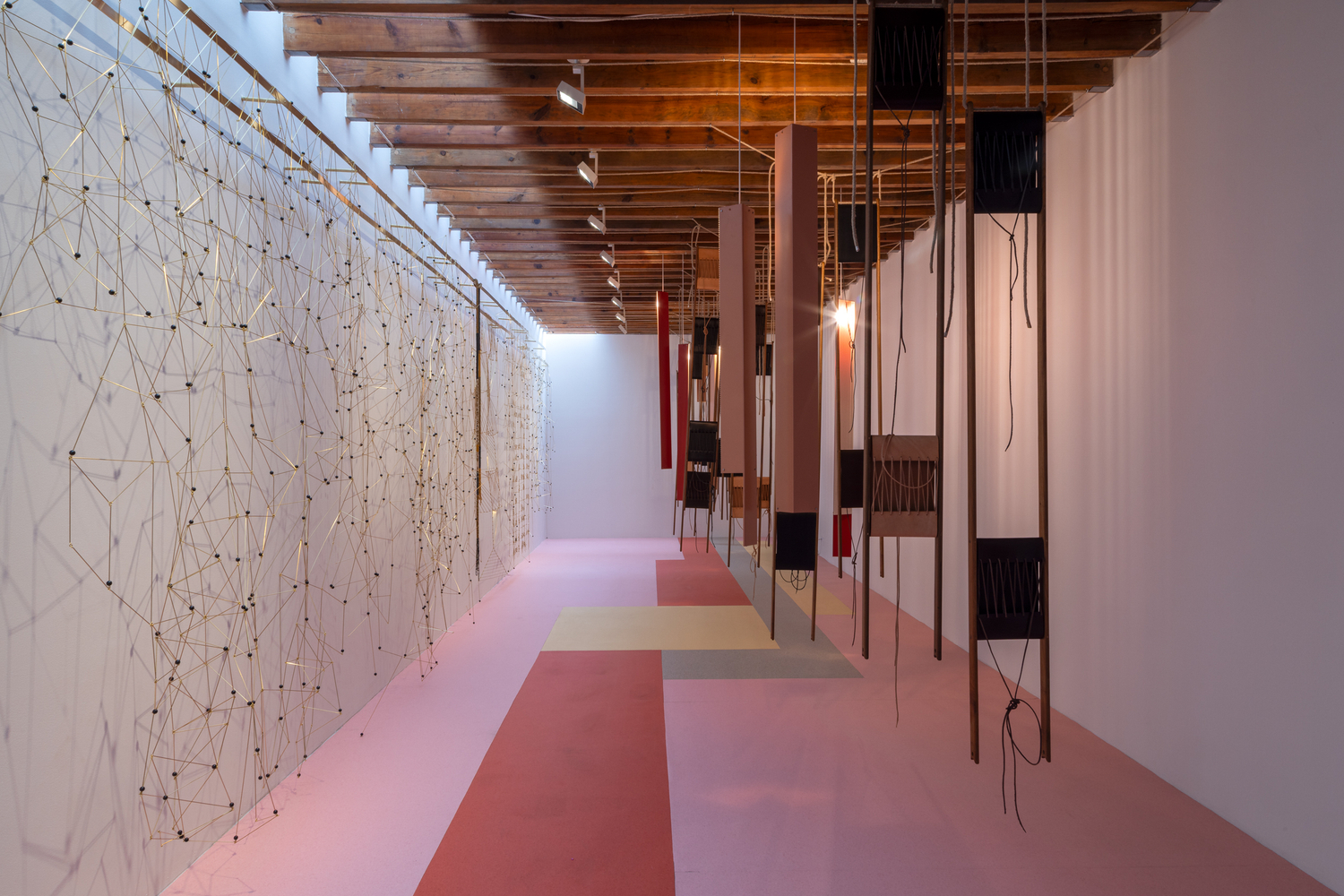
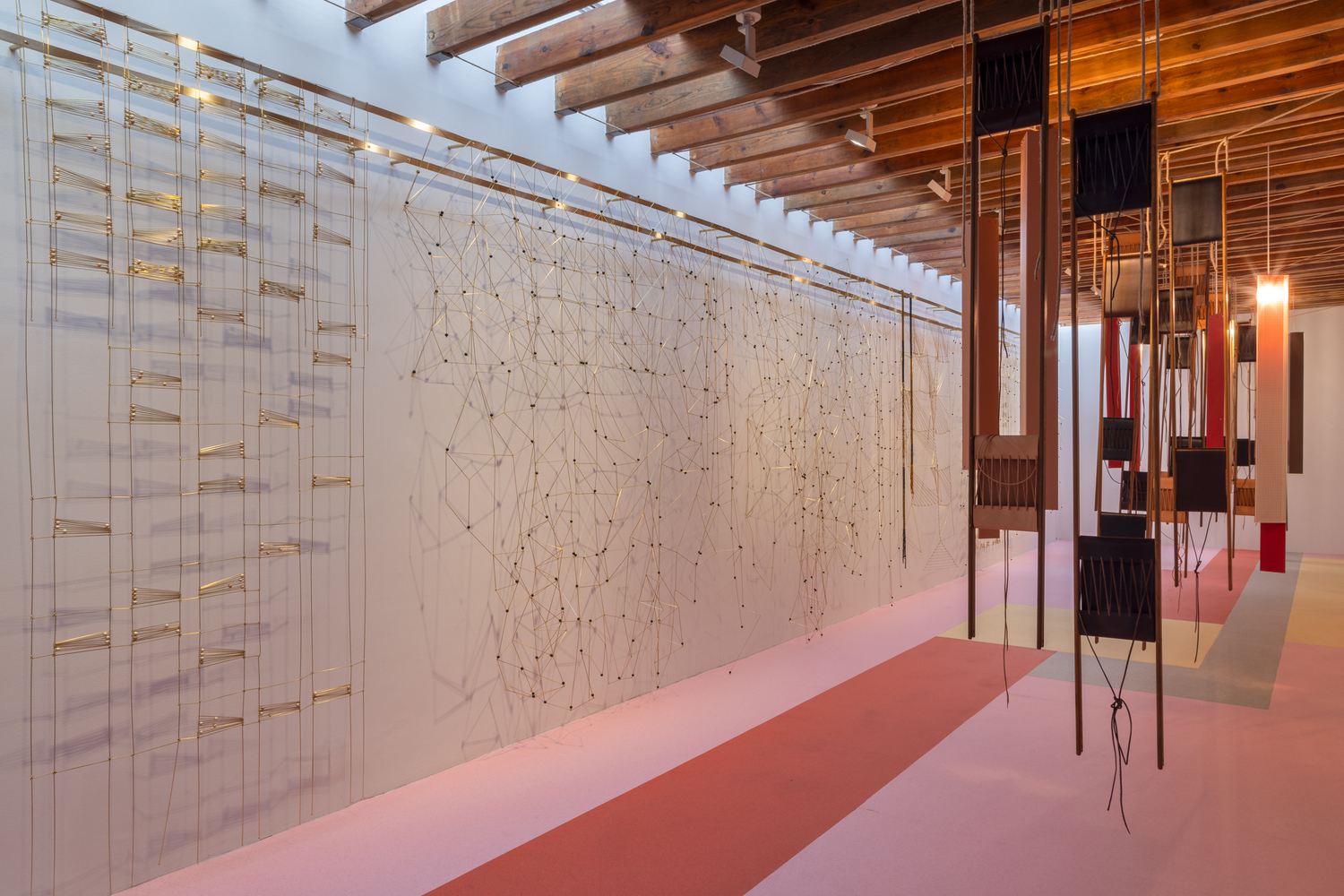
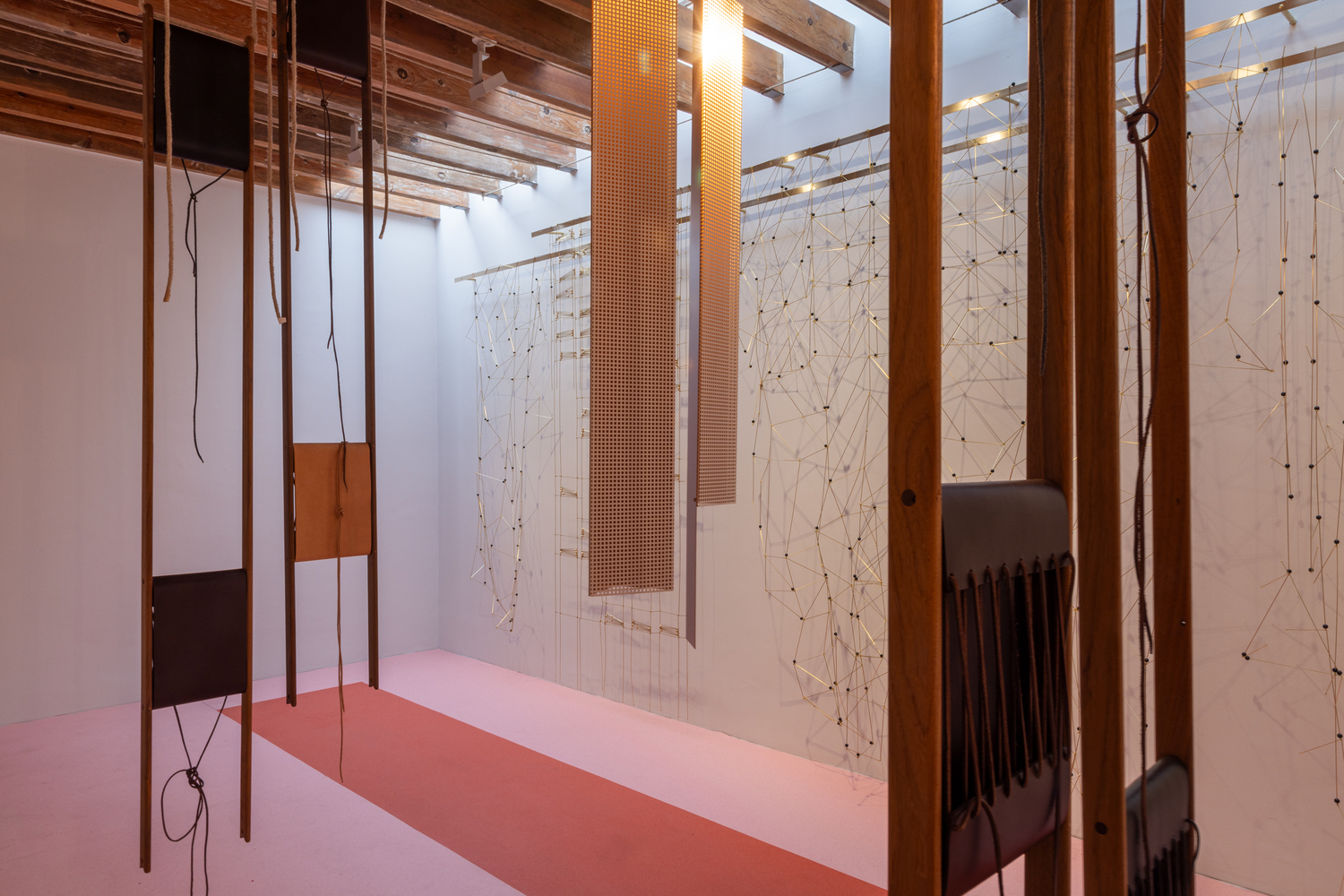
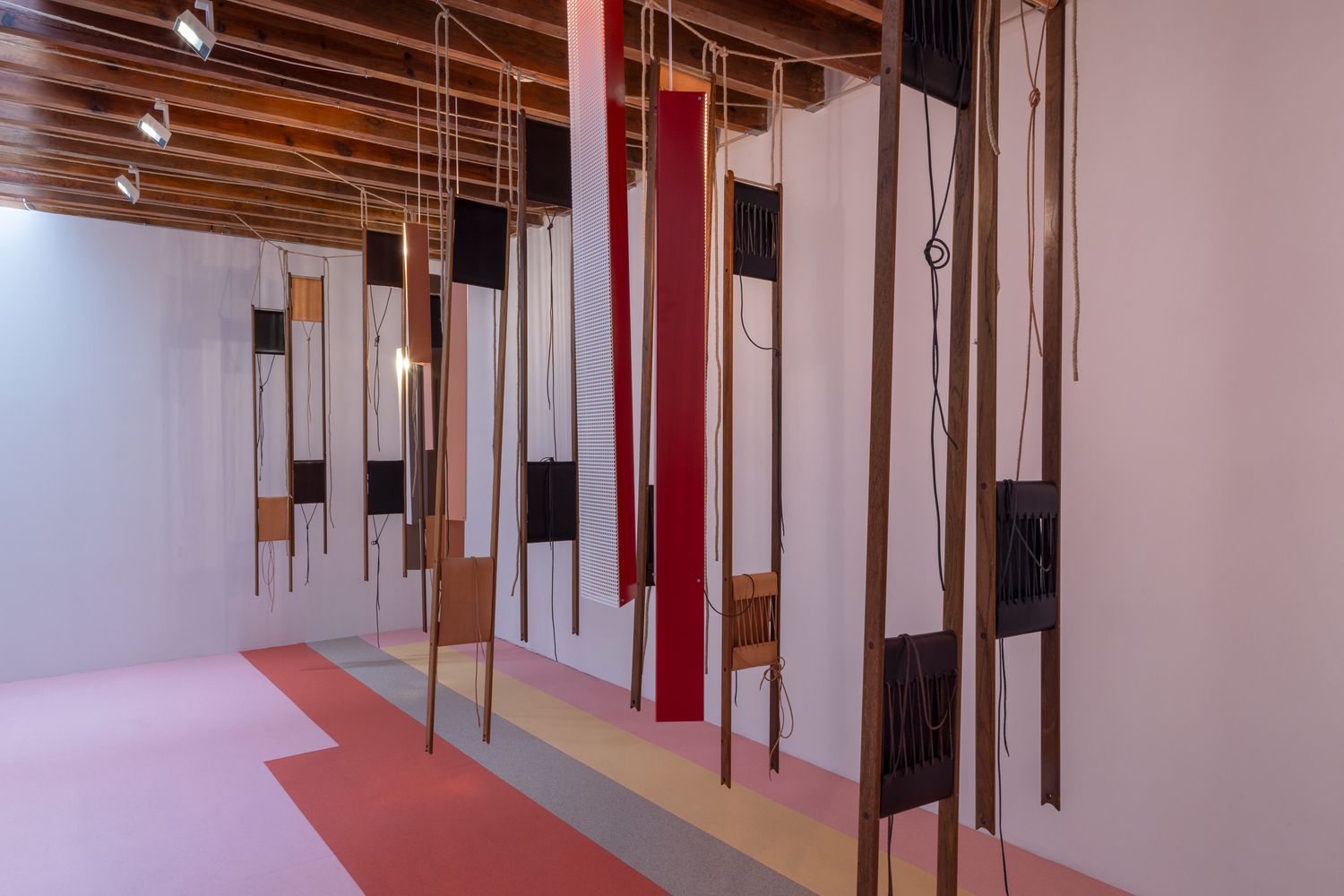
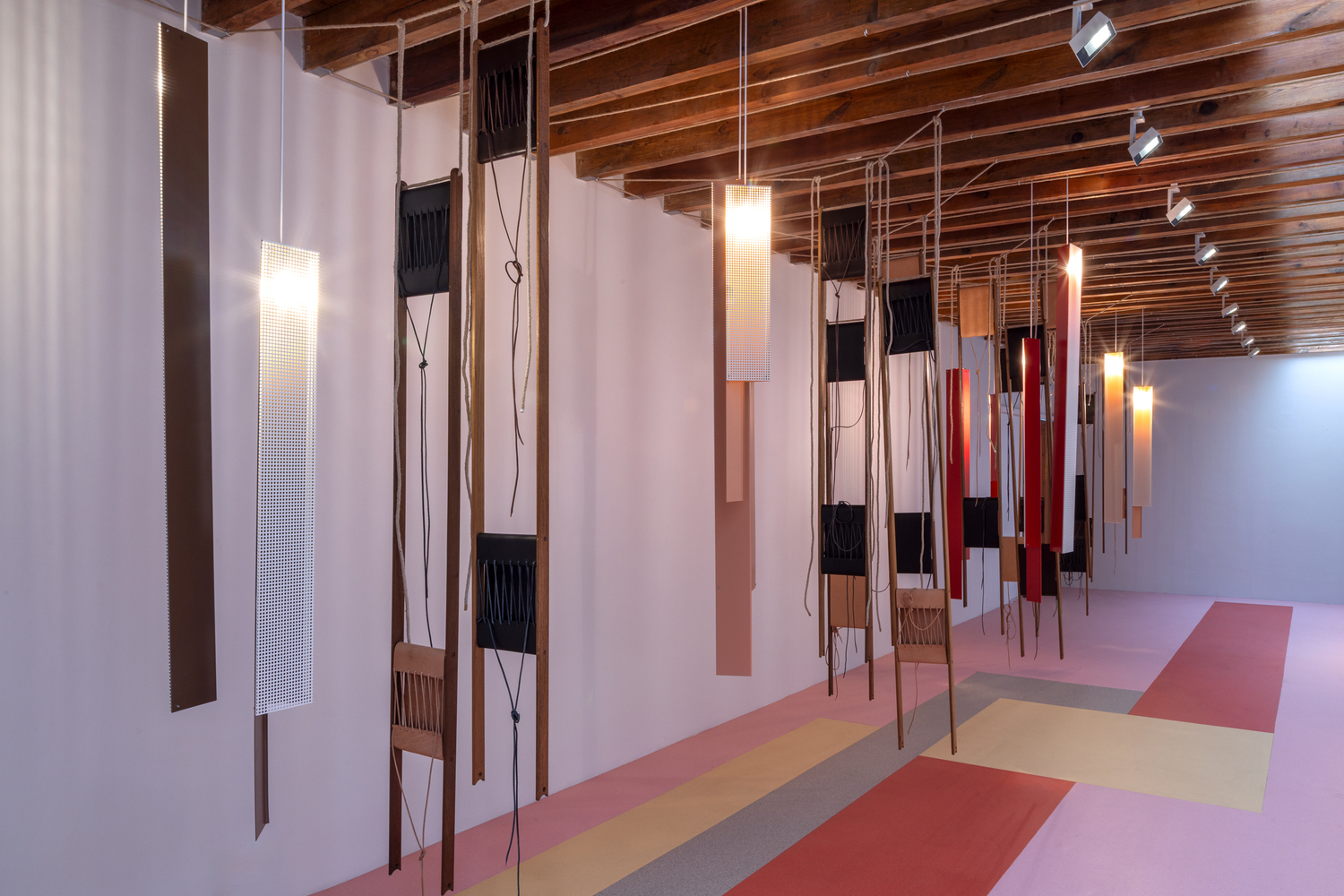
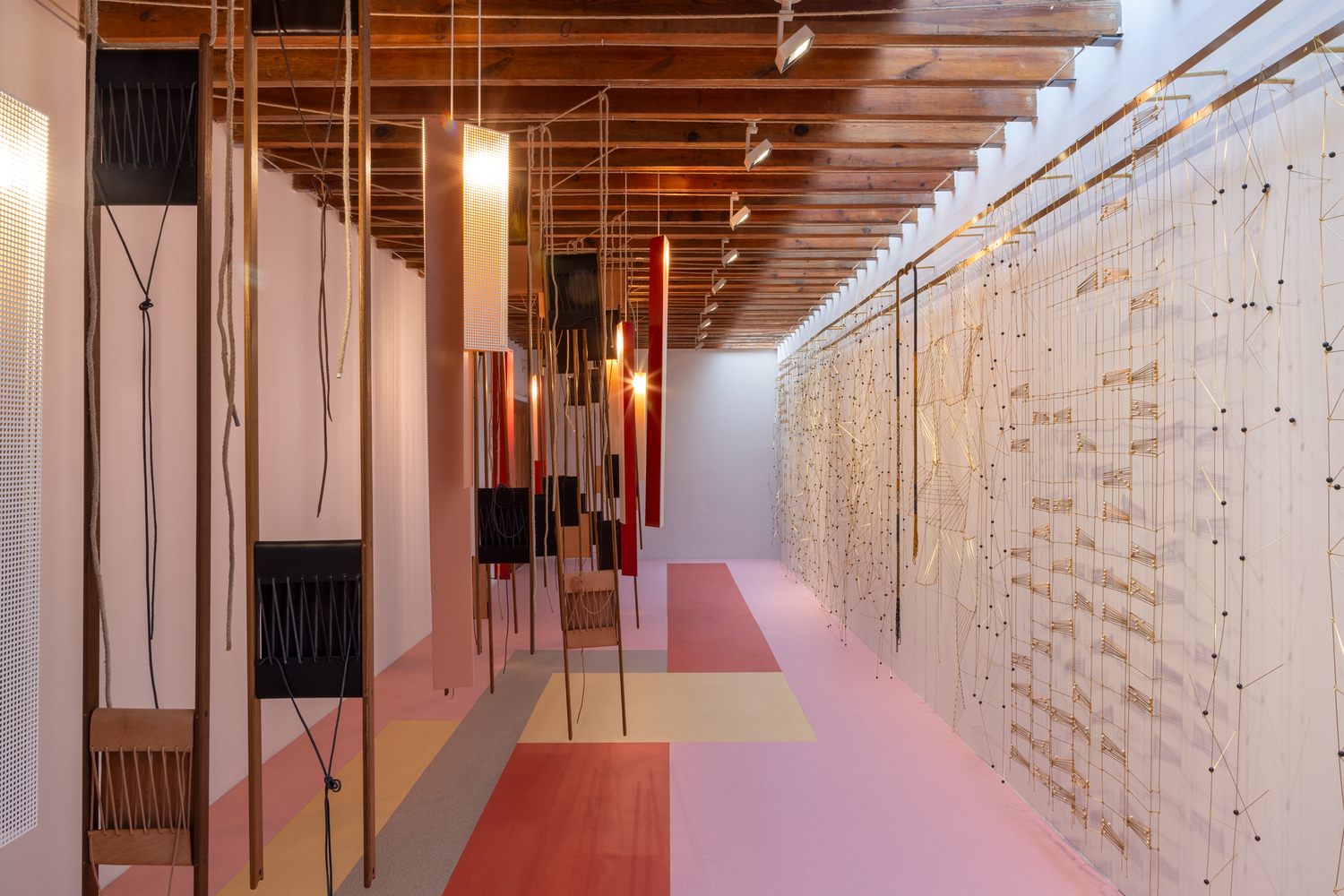
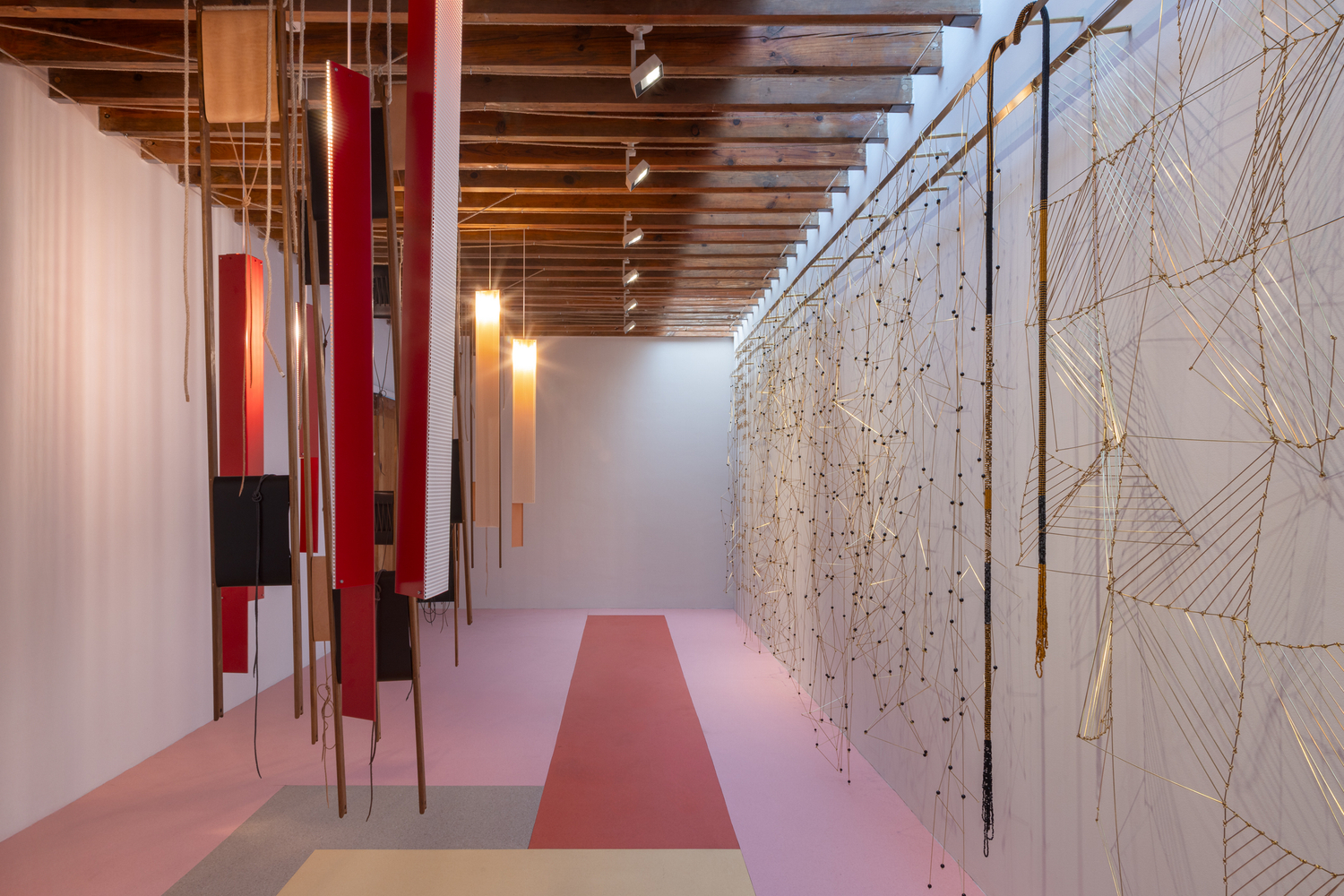
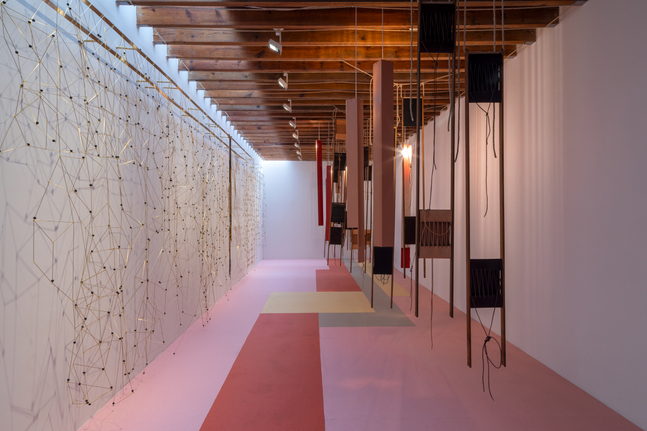
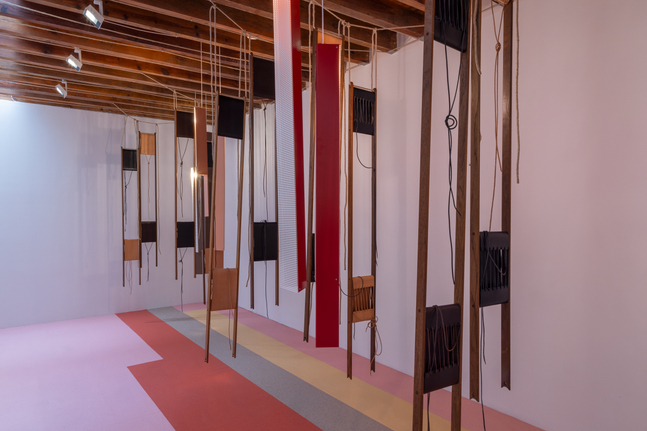
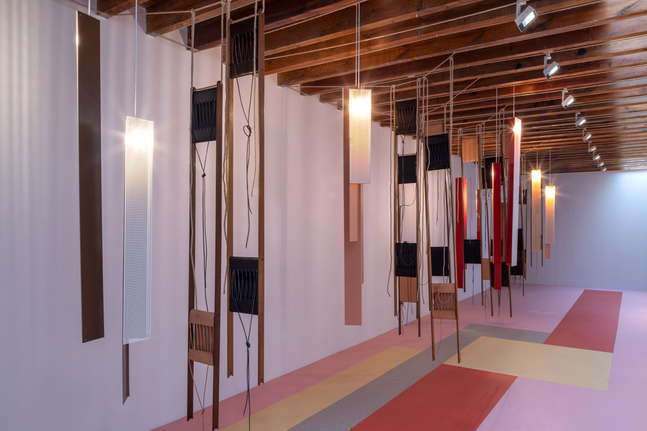
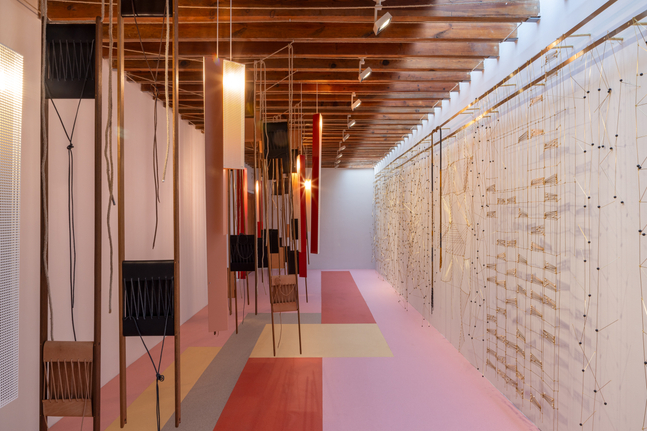
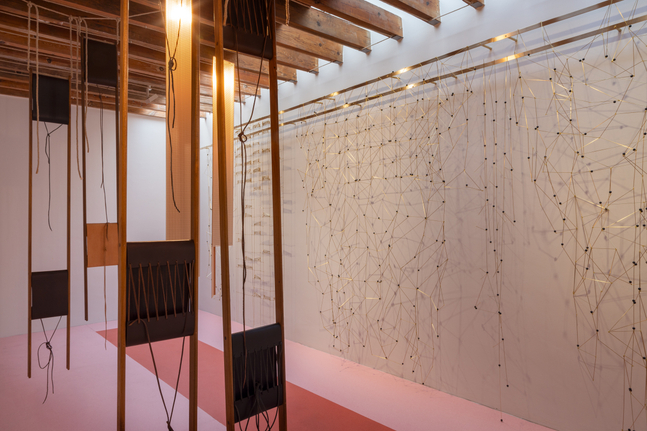
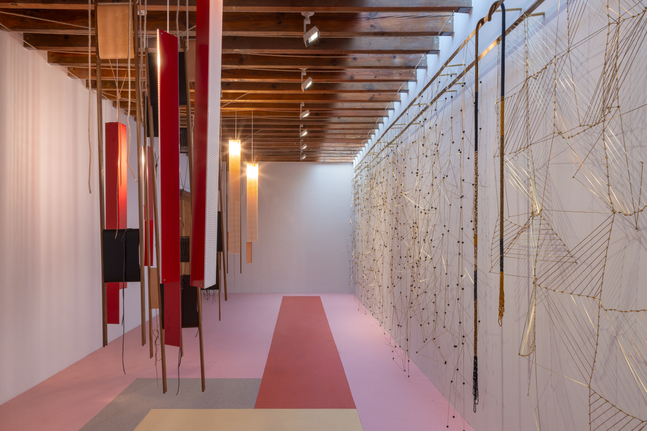
Upon entering the gallery, a linoleum floor piece immediately alters the perception and physical experience of the exhibition space. The geometric pattern was adapted by Antunes from a textile design by Léna Bergner, a German textile designer who spent a decade teaching and producing work in Mexico City during the 1940s through the Taller de Gráfica Popular. Here, the motif is reimagined as a modular system that functions both as a grid for the floor and as a compositional structure for powder-coated aluminum lamps suspended from the ceiling throughout the gallery.
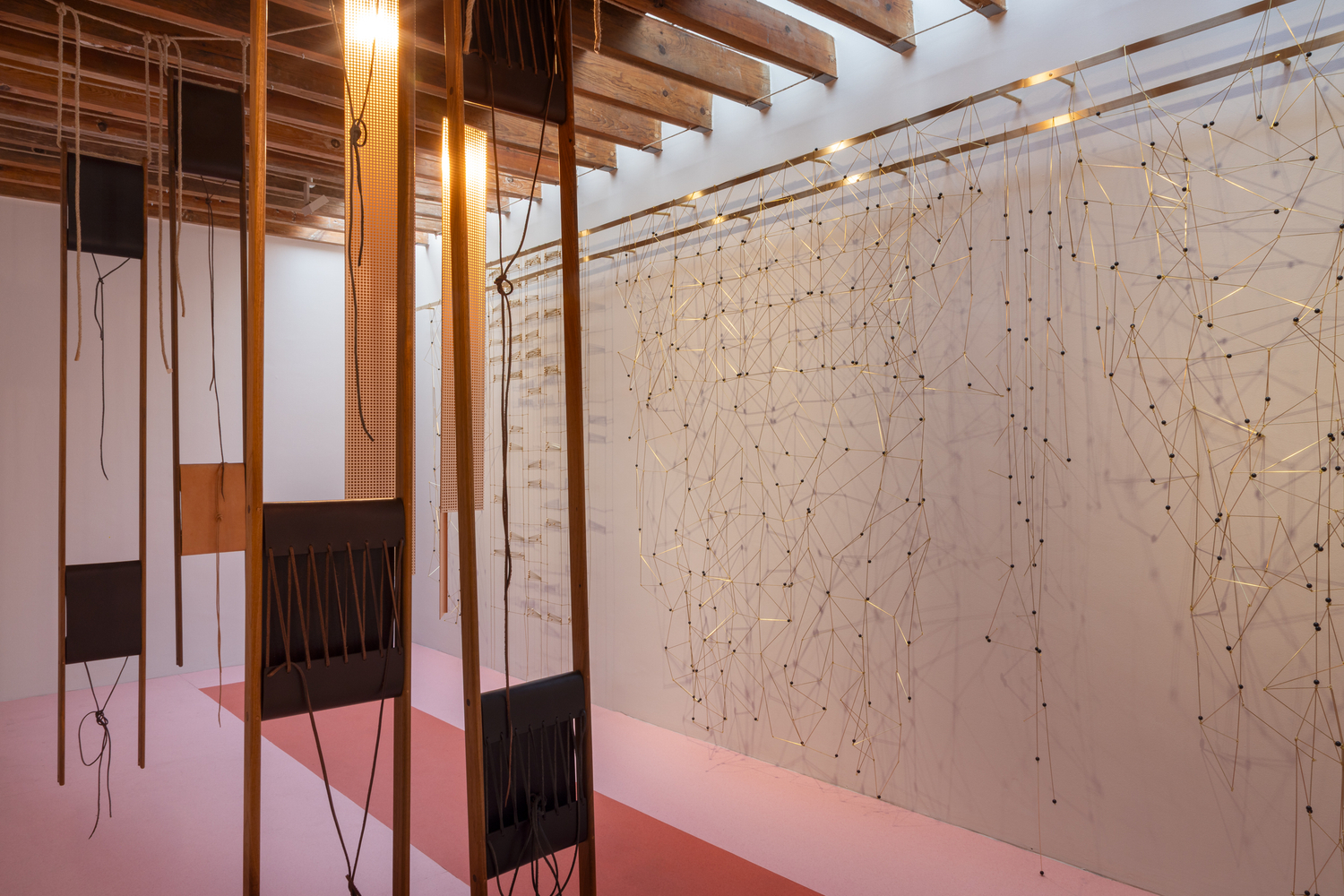
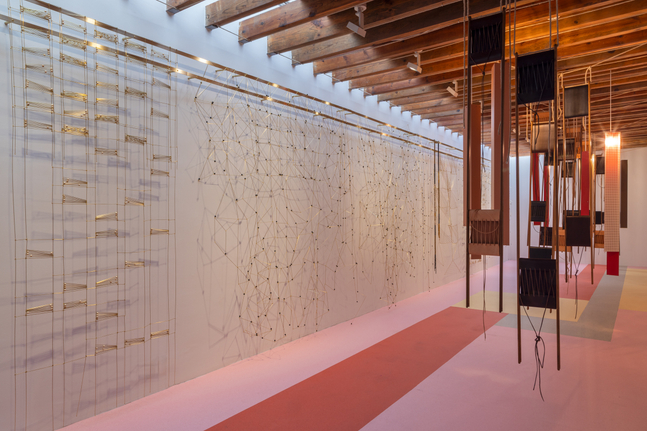
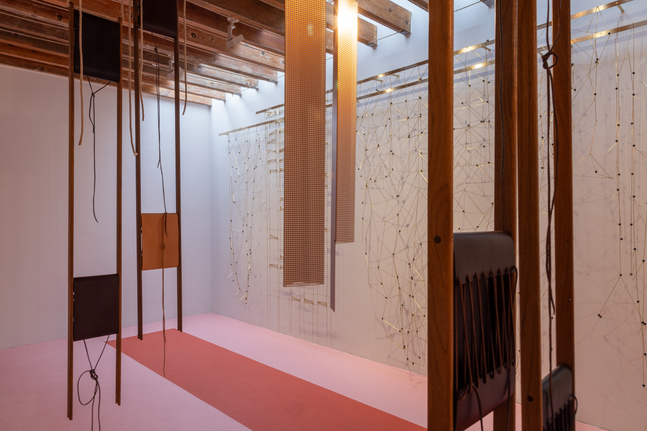
In the mid-1940s, Charlotte Perriand traveled to Japan as a government-appointed design advisor, working closely with local craftspeople and contributing to the production of objects intended to align with European sensibilities. Through multiple visits, she developed furniture, interiors, and architectural elements that translated Japanese forms and philosophies into modular modernist expressions. For this exhibition, Antunes transforms the grids and rhythms of the shelving systems Perriand designed after visiting the Villa Katsura in Kyoto into suspended sculptures made of teak wood and stained leather.
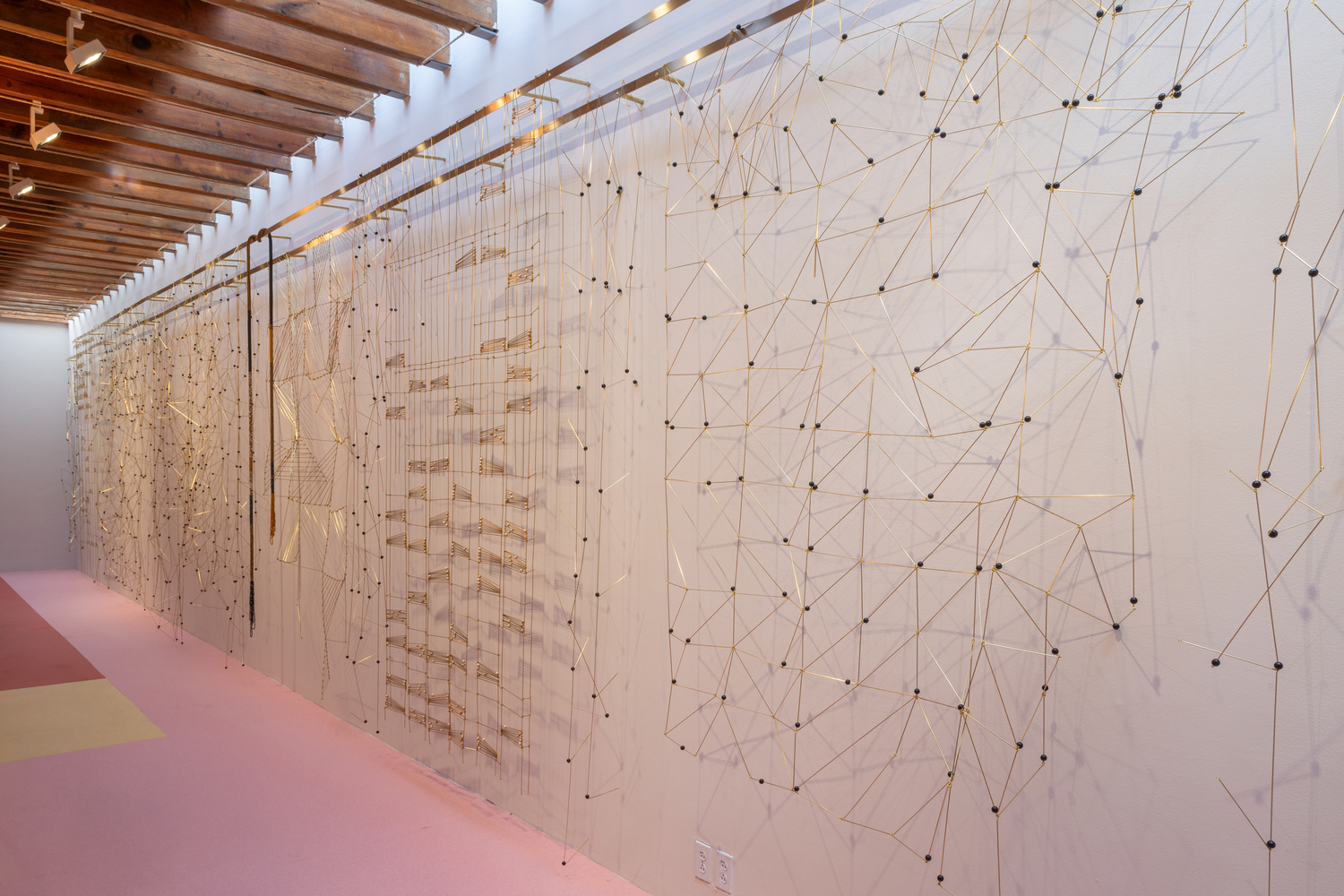
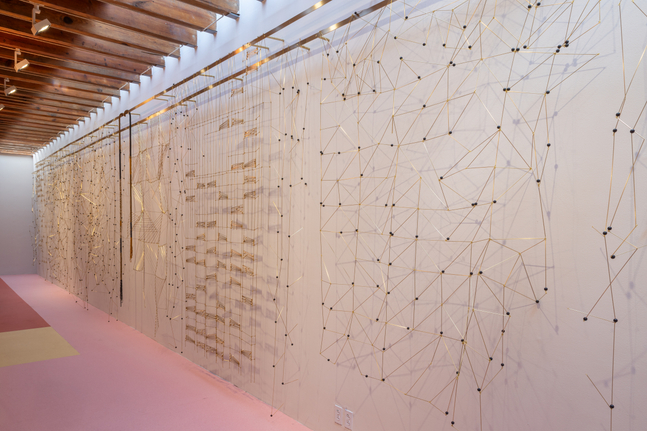
On one side of the gallery hangs an extended series of Antunes’s well-known brass lattice works, drawing on patterns created by Léna Bergner, Trude Guermonprez, and Anni Albers, three artists who are connected not only through formal and pedagogical lineages but also through a shared engagement with Mexican culture and craft traditions. Both Albers and Bergner spent significant periods in Mexico, where they worked with artisans and designers. During Albers’s extensive travels in Mexico, Guermonprez temporarily substituted for her in the weaving department at Black Mountain College, strengthening the close professional relationship they had established. In Antunes’s installation, new iterations from the Anni and T.G. series incorporate woven glass bead ropes.
Together, the works in this exhibition articulate a network of material, historical, and spatial relationships that bridge geographies and generations. Through careful acts of translation and transformation, Antunes constructs an environment that honors these pioneering figures while asserting her own sculptural language, inviting viewers to move through the space with heightened awareness of structure, rhythm, and the often-unseen histories embedded within modern design.
installation view leonor antunes: surface, edge and voids (expanded), kurimanzutto mexico city, 2026. photo: gerardo landa & eduardo (glr estudio)
installation view leonor antunes: surface, edge and voids (expanded), kurimanzutto mexico city, 2026. photo: gerardo landa & eduardo (glr estudio)
installation view leonor antunes: surface, edge and voids (expanded), kurimanzutto mexico city, 2026. photo: gerardo landa & eduardo (glr estudio)
installation view leonor antunes: surface, edge and voids (expanded), kurimanzutto mexico city, 2026. photo: gerardo landa & eduardo (glr estudio)
installation view leonor antunes: surface, edge and voids (expanded), kurimanzutto mexico city, 2026. photo: gerardo landa & eduardo (glr estudio)
installation view leonor antunes: surface, edge and voids (expanded), kurimanzutto mexico city, 2026. photo: gerardo landa & eduardo (glr estudio)
installation view leonor antunes: surface, edge and voids (expanded), kurimanzutto mexico city, 2026. photo: gerardo landa & eduardo (glr estudio)
installation view leonor antunes: surface, edge and voids (expanded), kurimanzutto mexico city, 2026. photo: gerardo landa & eduardo (glr estudio)
installation view leonor antunes: surface, edge and voids (expanded), kurimanzutto mexico city, 2026. photo: gerardo landa & eduardo (glr estudio)
read the full article about leonor antunes work on la consultoría
The artist created a new installation that exploits the physical qualities and proportions of this iconic architectural space designed by Ieoh Ming Pei.
For the first exhibition in St Luke’s, Antunes has been commissioned by The Box to create a new east window design, alongside a series of new sculptural works.
kurimanzutto is delighted to felicitate Leonor Antunes with a seam, a surface, a hinge or a knot representing the Portugal Pavilion at the Fundazione Ugo et Olga Levi Onlus, Palazzo Giustinian Lolin.
The Last Days in Galliate is Leonor Antunes first major exhibition in Italy, conceived as a complex installation that fills the 1,400 square metres on the space known as the shed at Pirelli HangarBicocca: the works, many of which are new productions, converge with the structural elements of context and the natural lightning, thus merging into a single narrative.
Her sculptures and interventions transform, in a certain way, the places where they are placed, and explore notions that are normally associated with the architectural, the planned and the built-such as measurement, proportion or scale. Paradoxically, Antunes has a systematic work methodology that incorporates randomness and arbitrariness as part of its raw material, which gives autonomy to the subject and gives its forms a specific meaning.


