
mariana castillo deball

Mariana Castillo Deball’s practice examines how historical narratives are produced, circulated, and reclaimed. Through drawing, scratching, rubbing, and tracing, she reactivates materials and stories from the past, considering who has access to historical objects and how histories can be embodied anew.
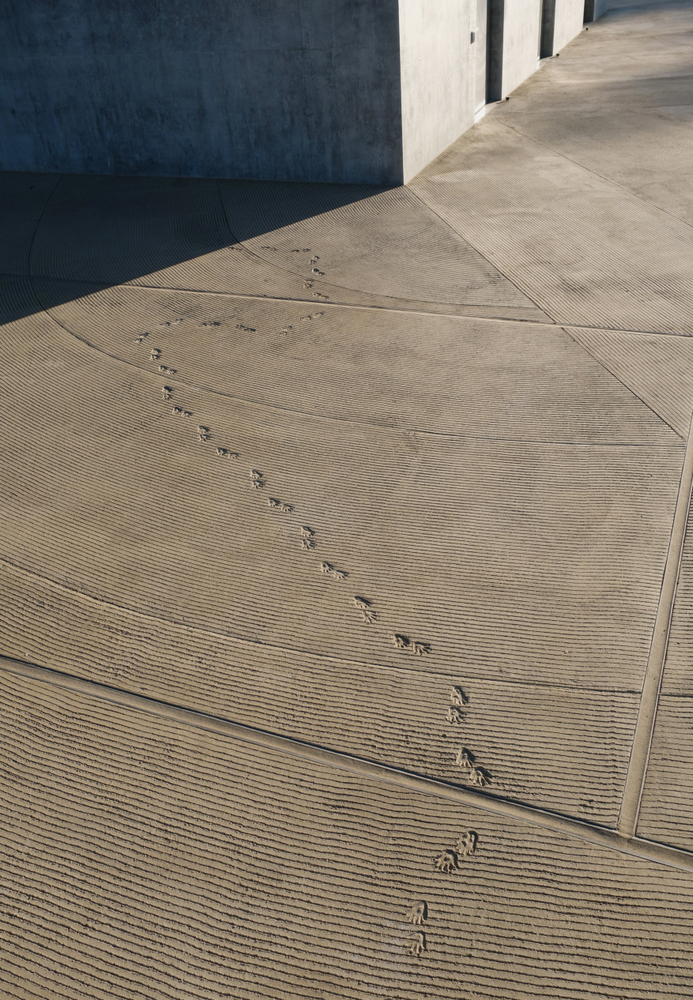
For her first exhibition at kurimanzutto, New York, Castillo Deball presents Serpent Disappearances, a project that traces the development and construction of her major public artwork Feathered Changes (2025), commissioned for the plaza at the new David Geffen Galleries at the Los Angeles County Museum of Art, designed by Peter Zumthor. Located on land once shaped by a nourishing marsh ecosystem, the plaza project reflects the artist’s interest in geology, time, history and labor as intertwined forces embedded in a particular site.
Over the course of more than two years, the commission involved close collaboration with the architect, engineers, and on-site construction teams in Los Angeles. Serpent Disappearances brings this extensive fieldwork into the gallery, foregrounding the tools, methods, and relationships that informed the making of the LACMA plaza.
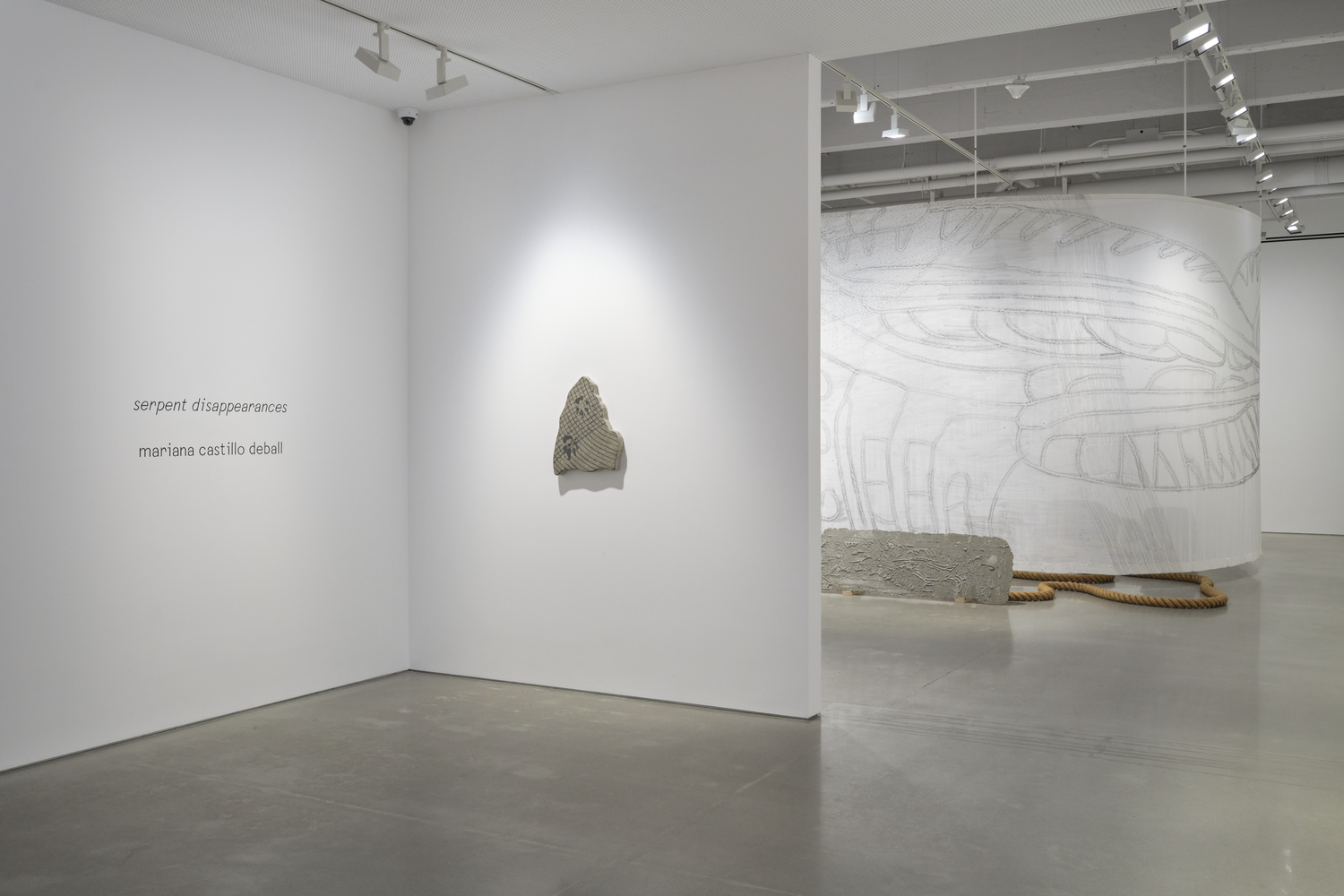
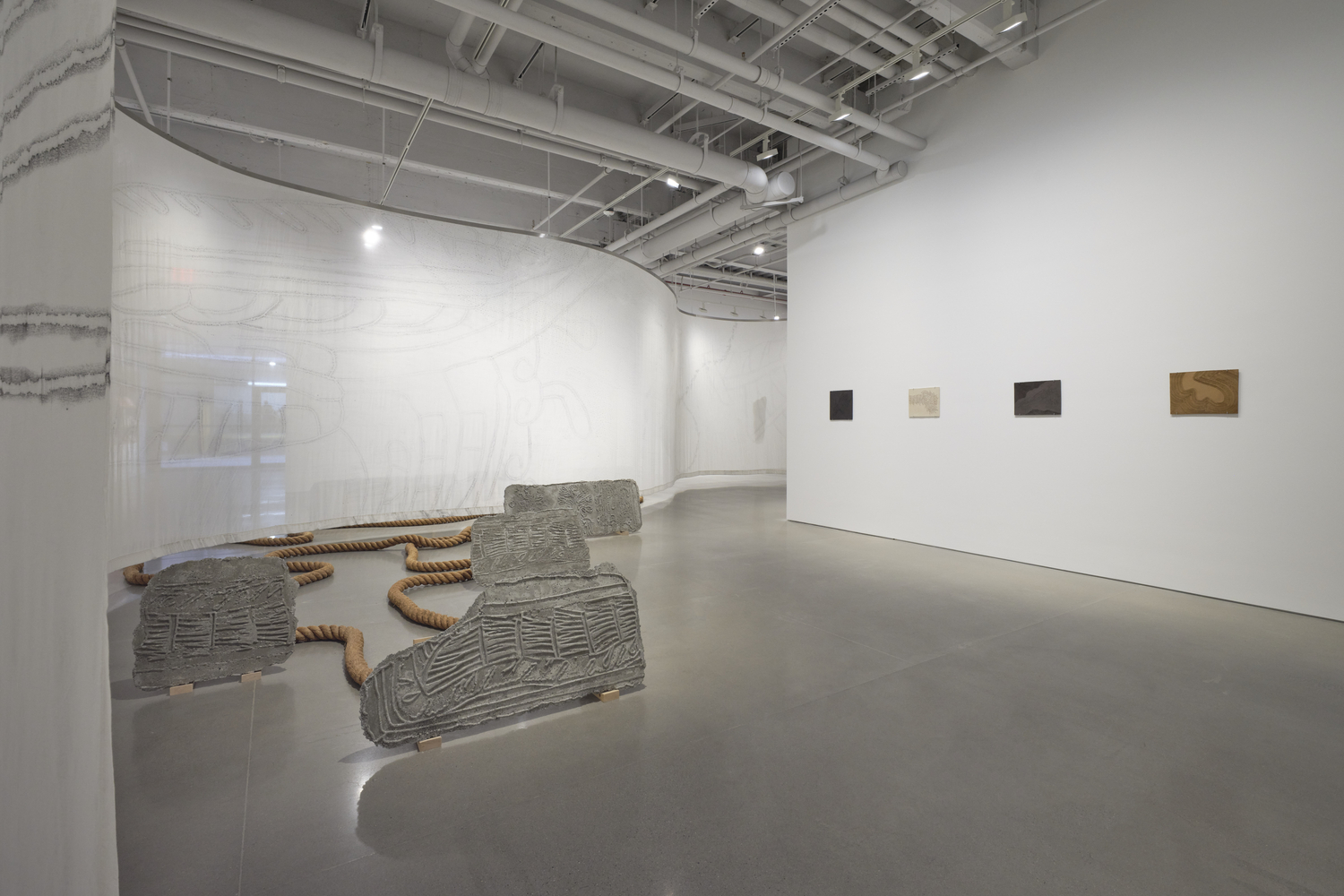
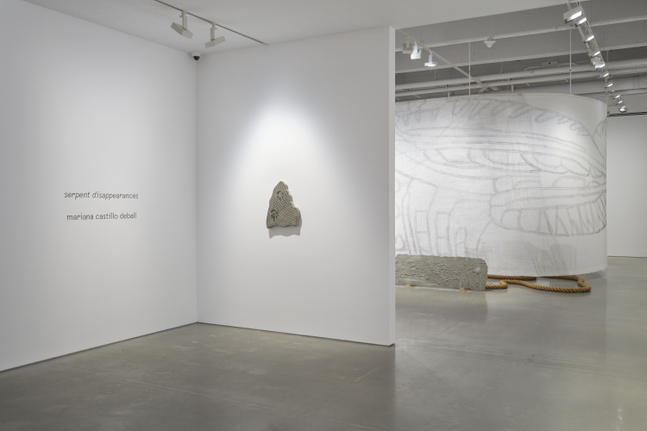
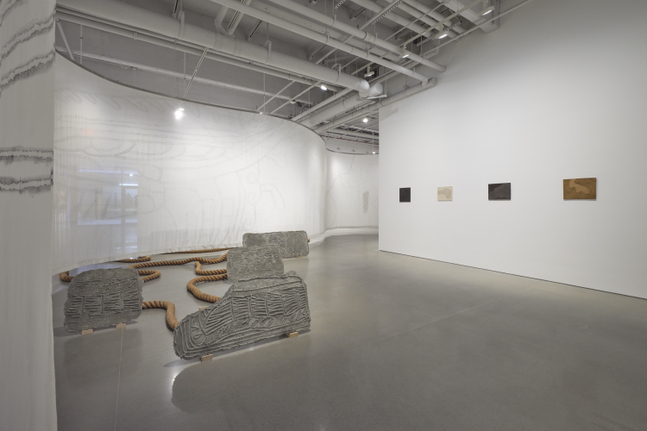
Visitors are first met by Feathered Serpent (2016), a concrete work that predates and conceptually anticipates the Los Angeles commission. Originally produced for the exhibition Feathered Changes, Serpent Disappearances at the San Francisco Art Institute, the sculpture reflects Castillo Deball’s research into the dispersion of Teotihuacan mural fragments into collections worldwide—an inquiry that connects archaeology, museum practices, and the circulation of artifacts across multiple institutional and cultural contexts. For many years, the Feathered Serpent—a mythological creature present in Mesoamerican cultures, symbolizing the connection between earth and sun, soil and water, place and transformation—has been a recurring motif in Castillo Deball’s practice, to which she returns through different means of expression.
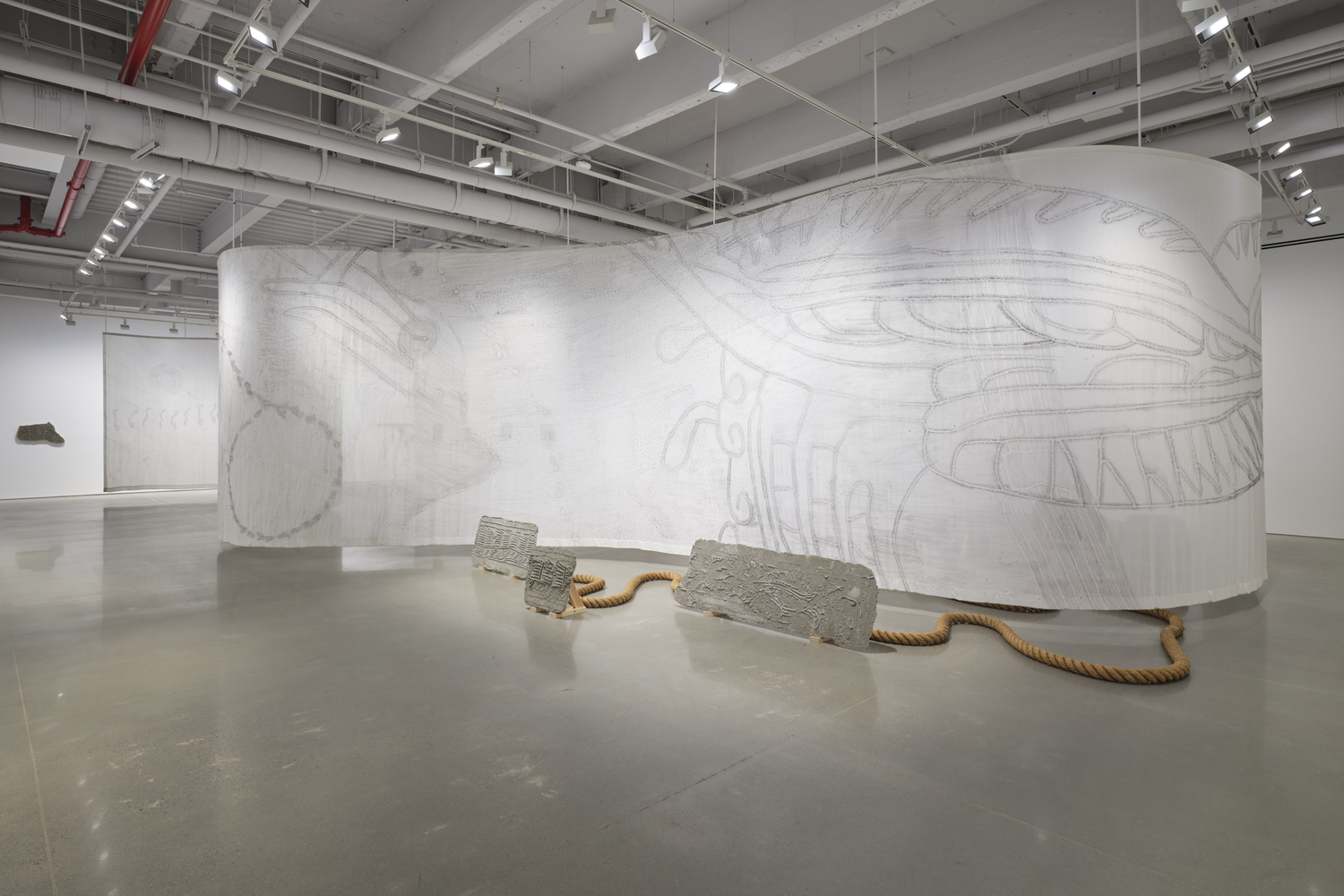
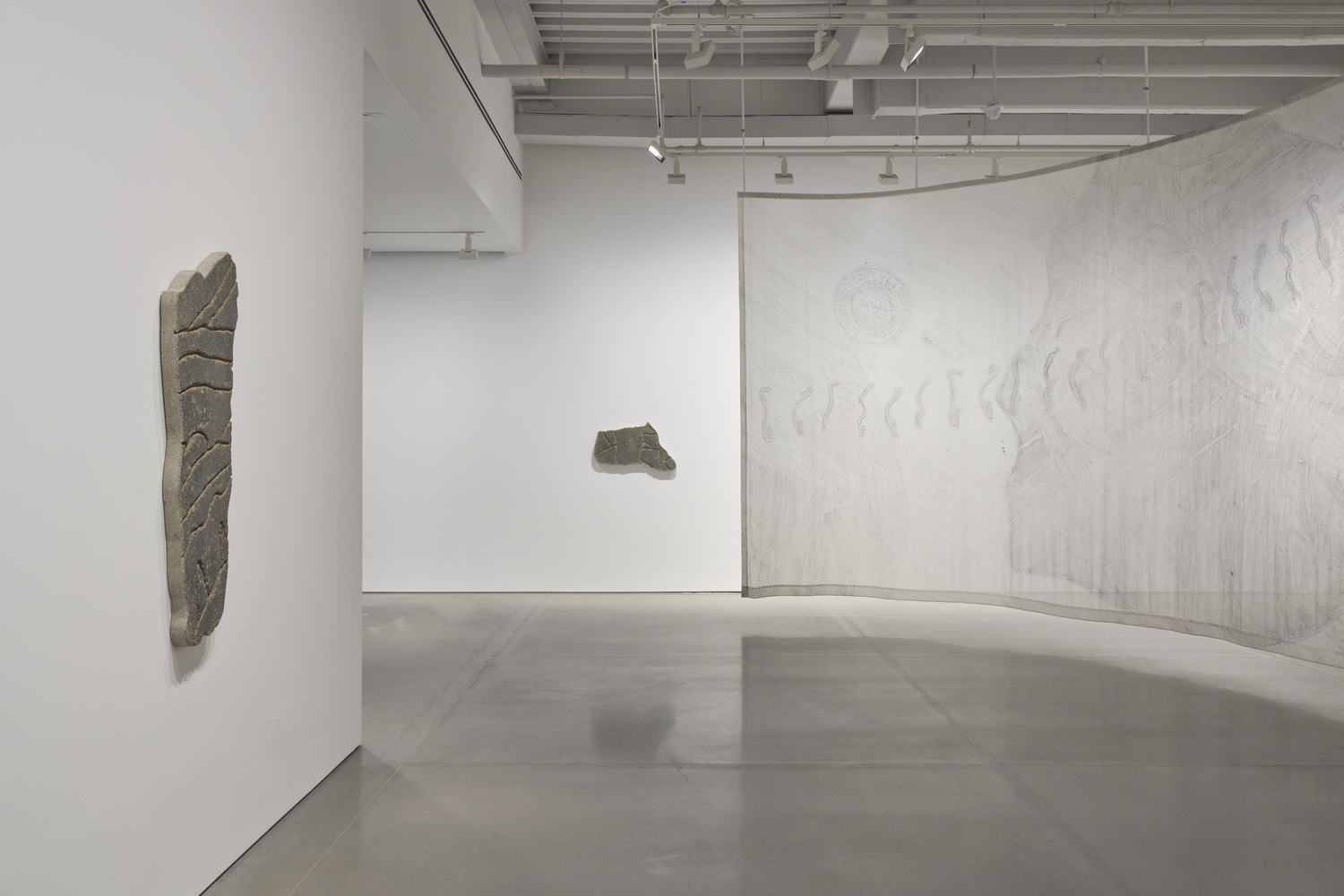
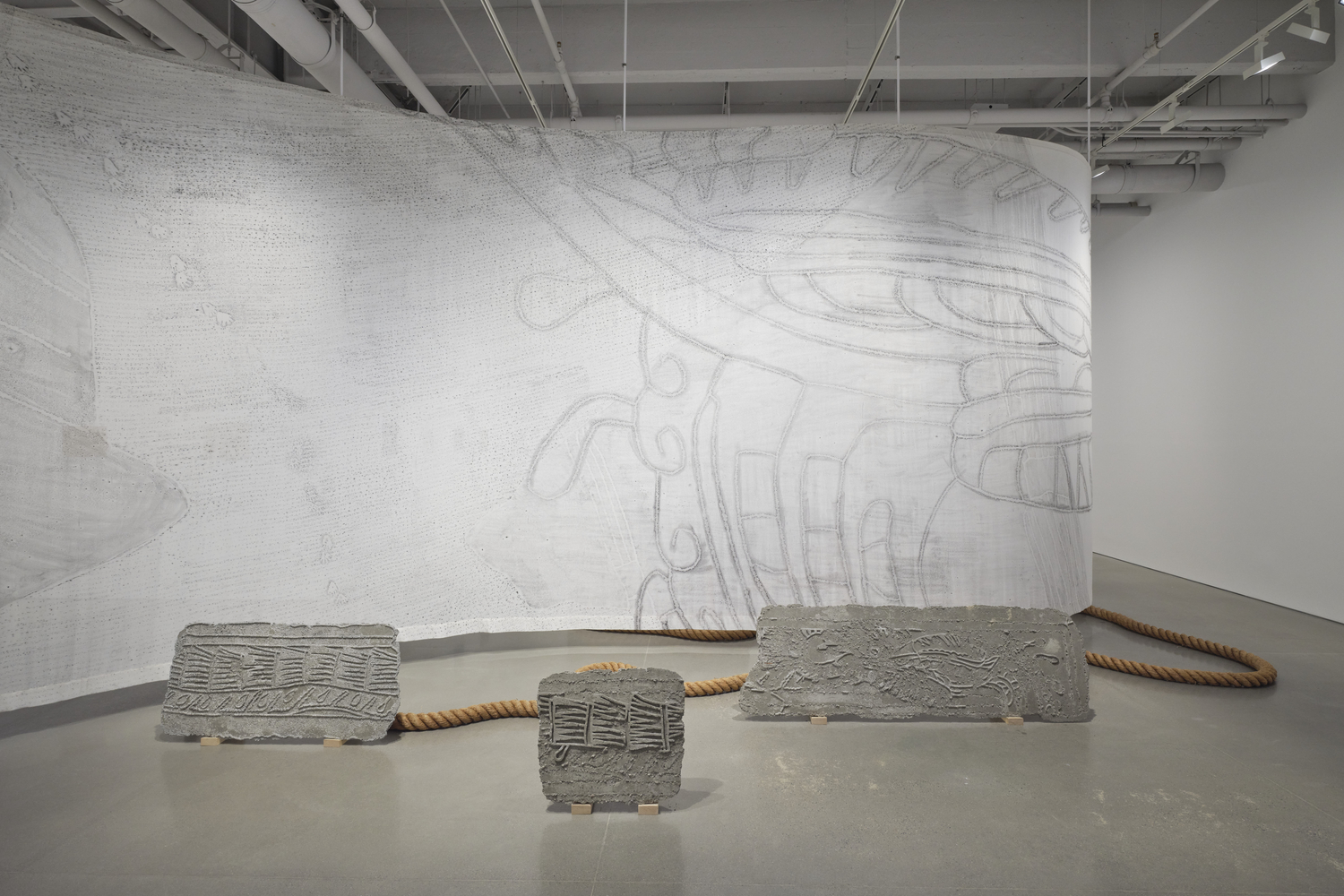
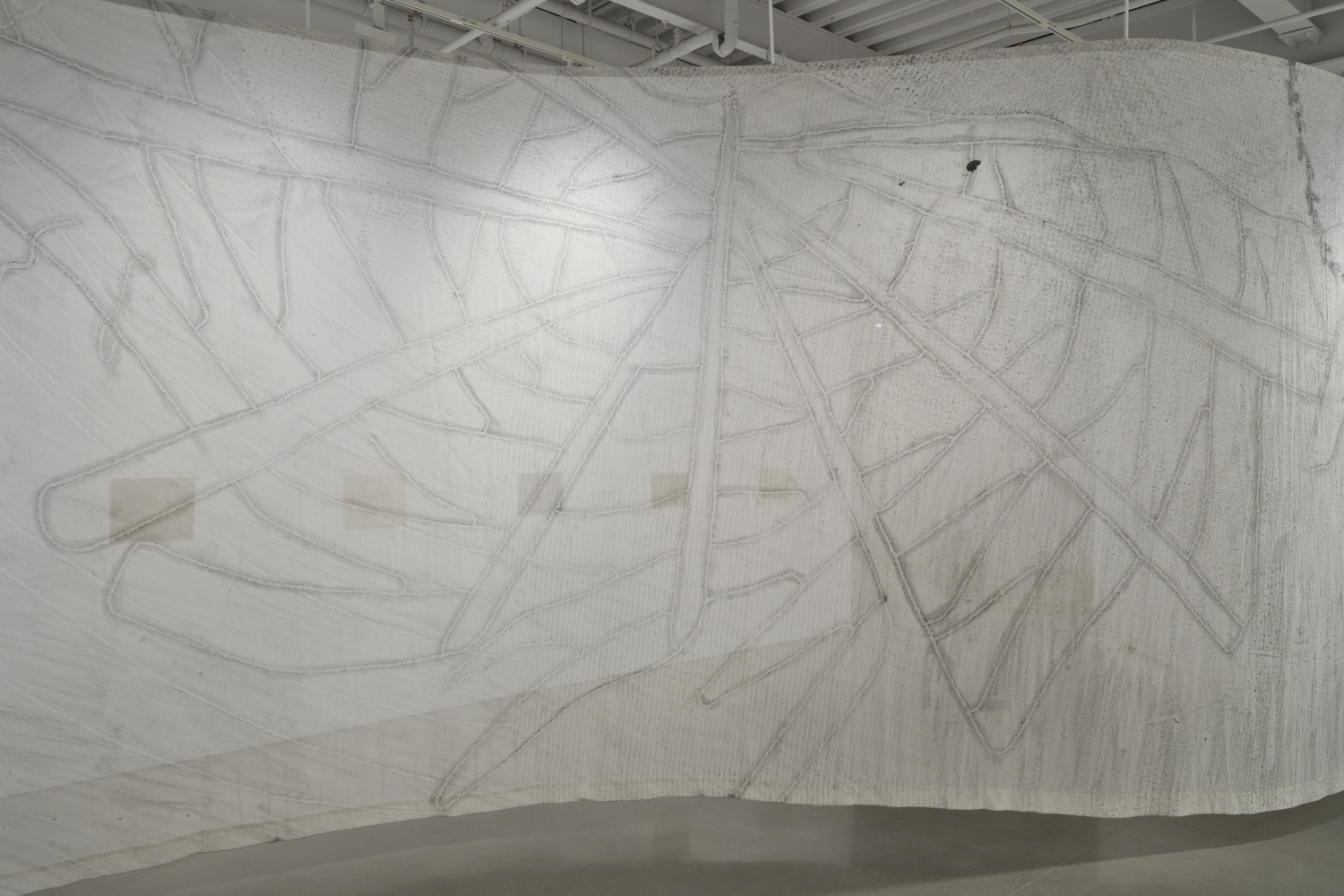
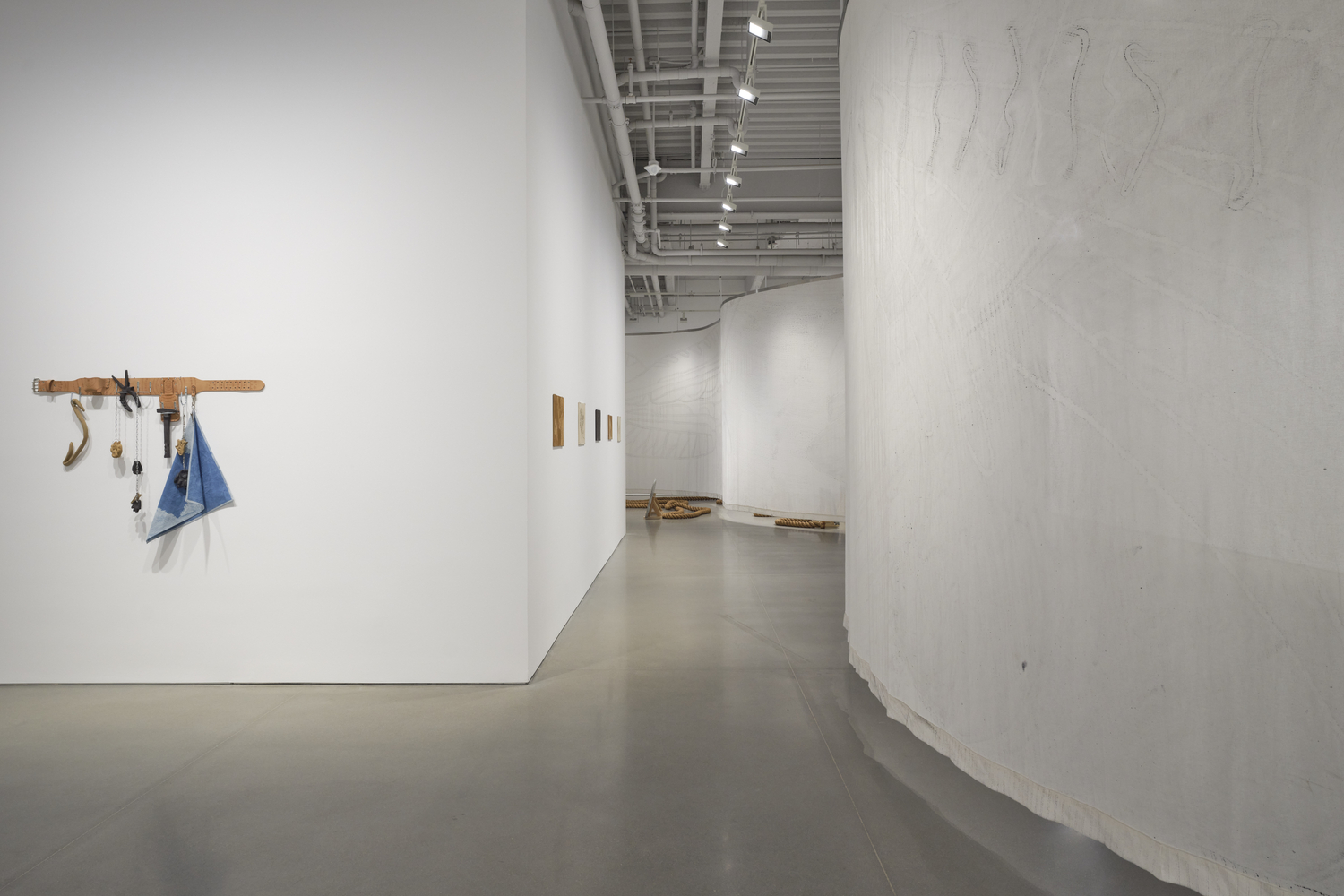
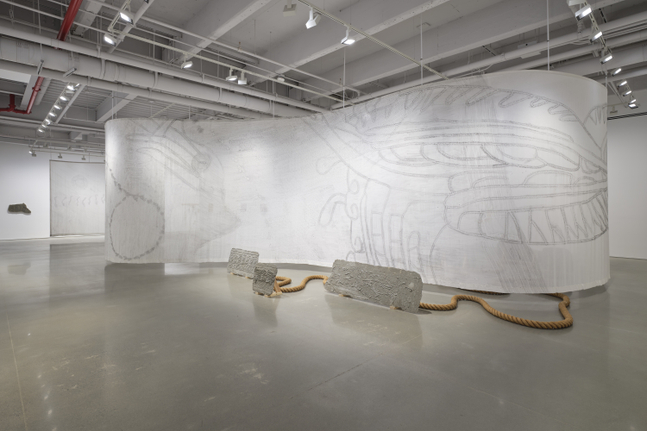
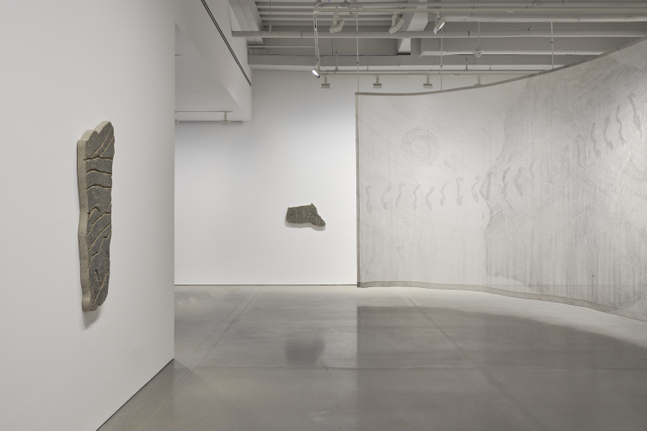
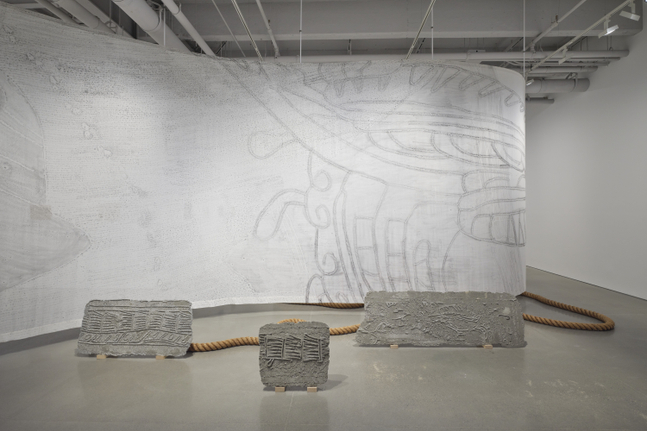
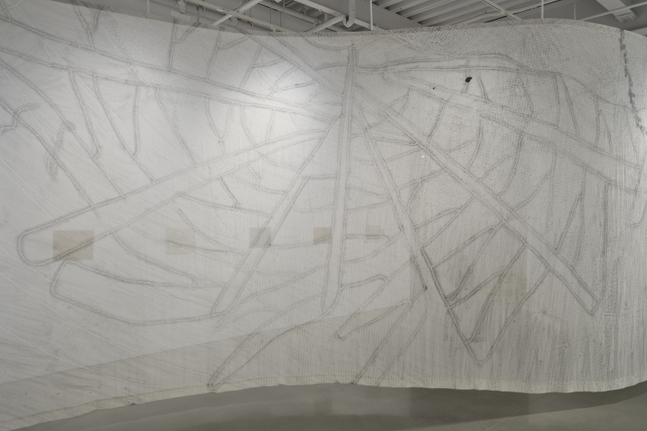
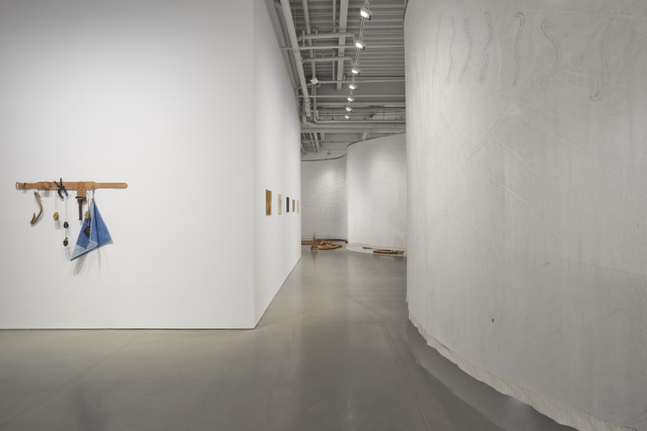
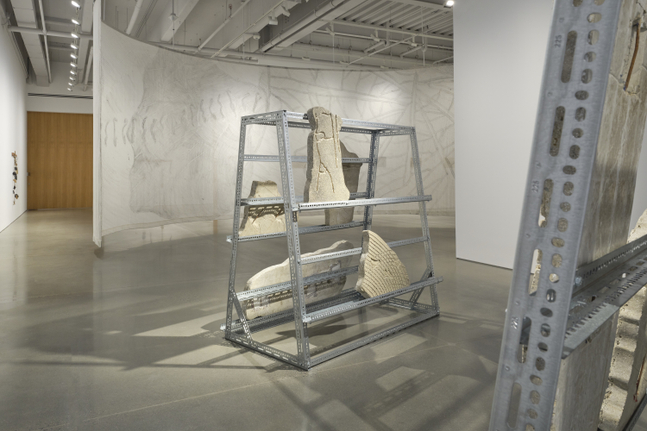
A large-scale textile unfurls through the gallery, created through direct frottage—rubbing fabric over a textured surface to capture its imprint—from the concrete pavement of the LACMA plaza. Acting as a palimpsest, the fabric accumulates impressions from multiple zones of the site, including infrastructural features such as manholes, producing a tactile mapping of the building’s footprint.
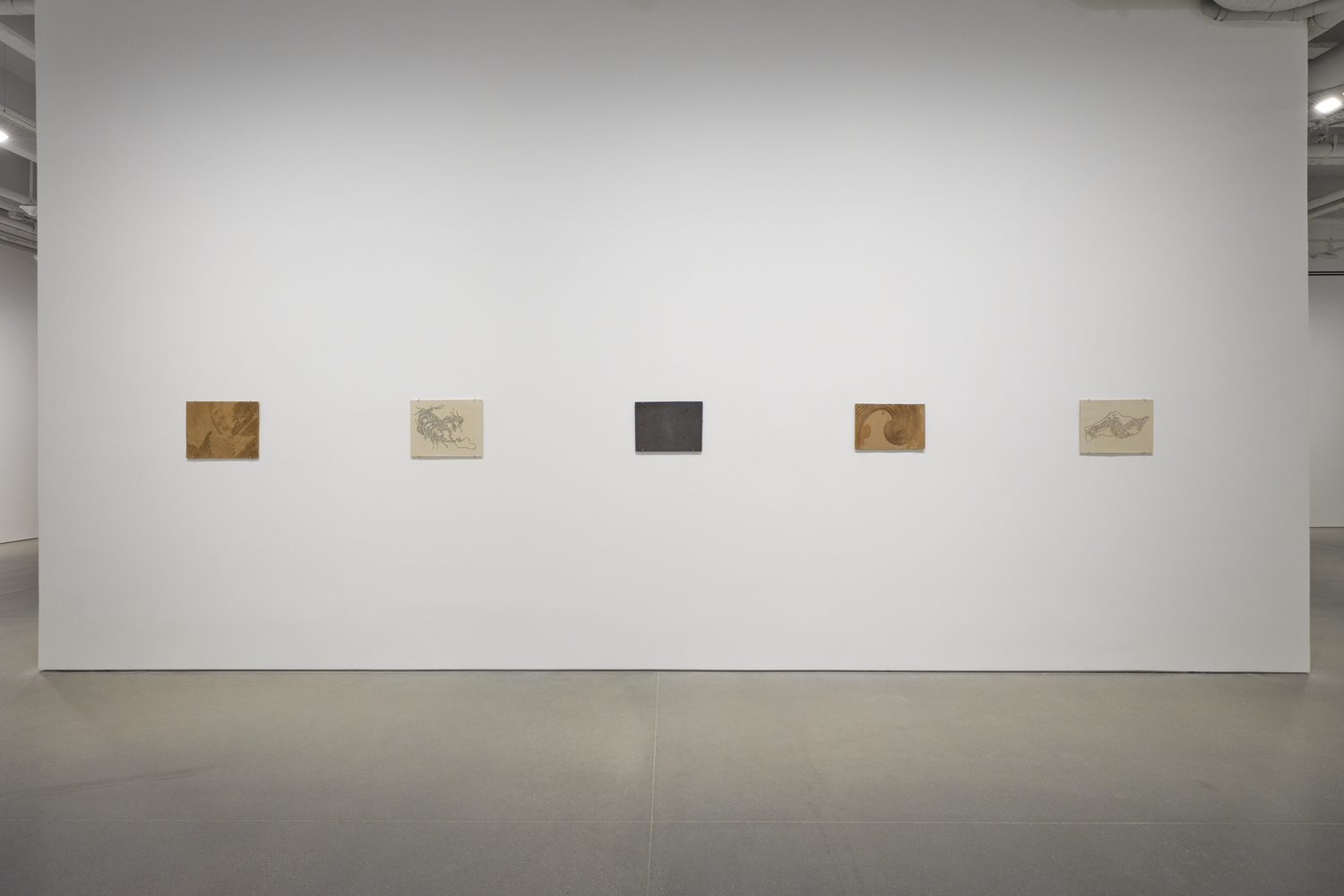
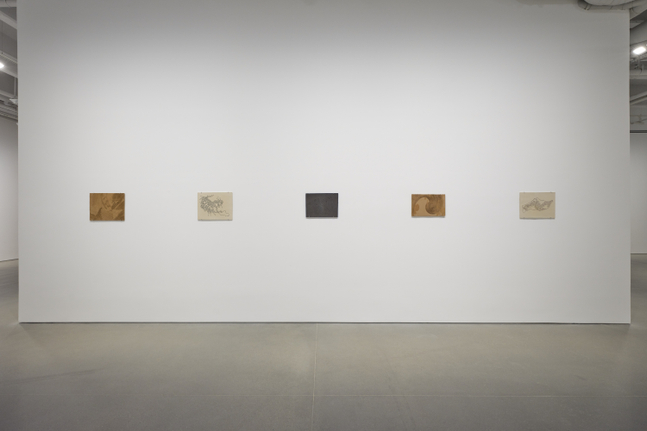
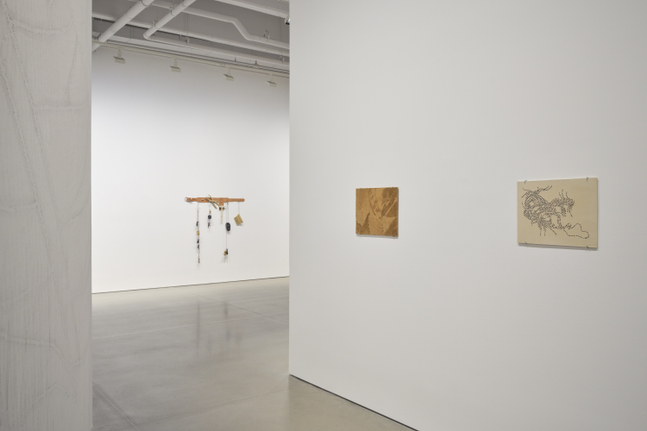
Hung on the walls is a series of ceramic works sketching the techniques the artist developed in collaboration with the construction team on site in Los Angeles. Together, they tested various methods for marking concrete surfaces, using ropes, brushes, stamps, and even their own hands to create the rhythm and textures that shaped the composition of the plaza floor. These ceramic slabs offer a close, detailed view of the artist’s process.
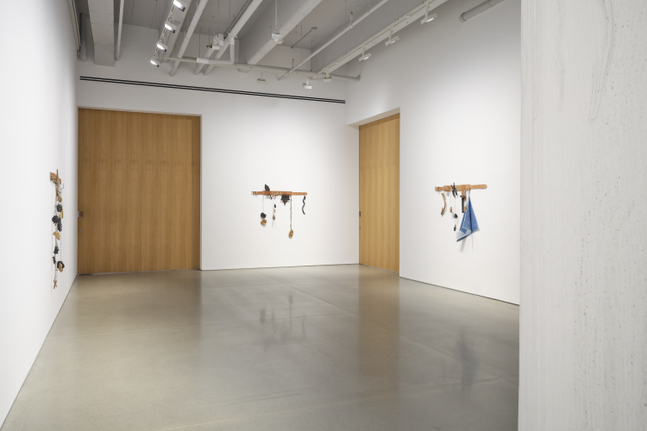
The exhibition also presents a series of paliacates—cotton scarves commonly worn by construction workers to protect them against dust and sweat—produced by the artist using a Japanese resist-dye technique with indigo pigment. Each hand-made textile reproduces sections of the plaza floor in miniature and includes a label crediting the more than one hundred workers involved in the project, who received a paliacate from the artist as a gesture of thanks in 2025.
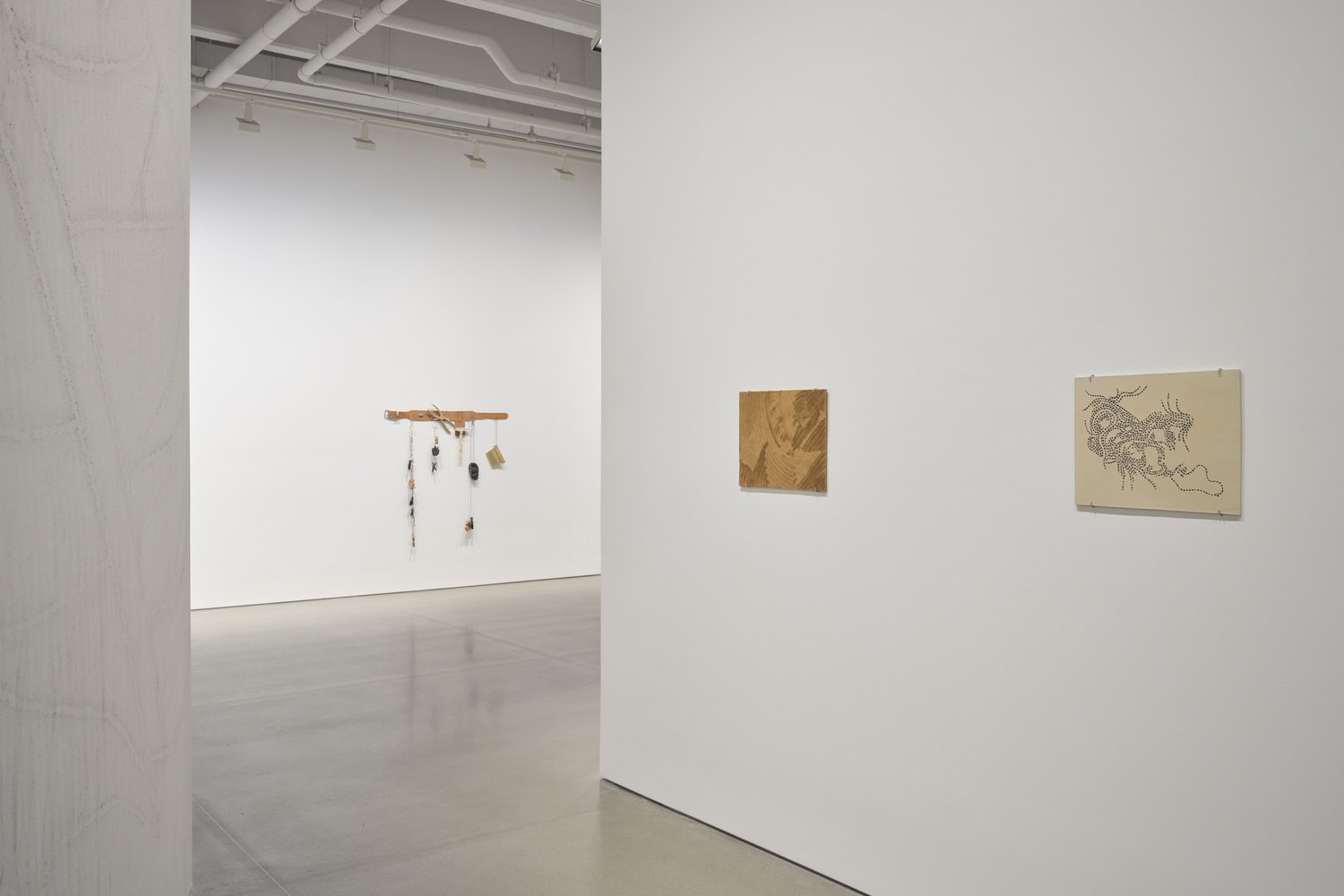
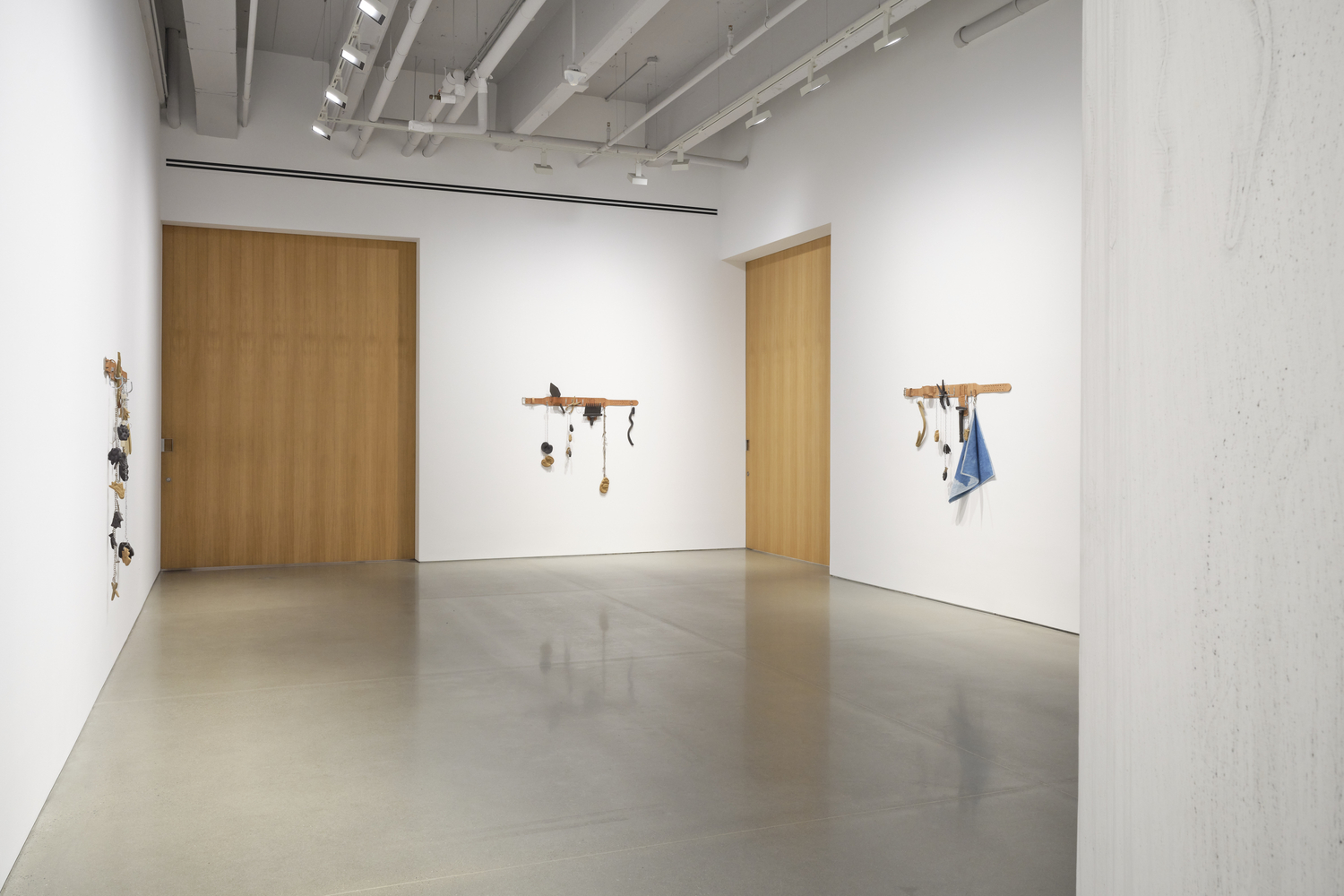
Construction workers also wear leather belts to hold their tools; these waistbands are often customized with their names and personalized engravings—they function as individual, portable body-workshops. The artist customized a series of leather belts embossed with a modular metal stamp set of the Aztec calendar she found in downtown Mexico City. These belts hold ceramic pieces of human tools and animal paws including those of a beaver, snake, road runner, bison, wolf, raccoon, and bear.
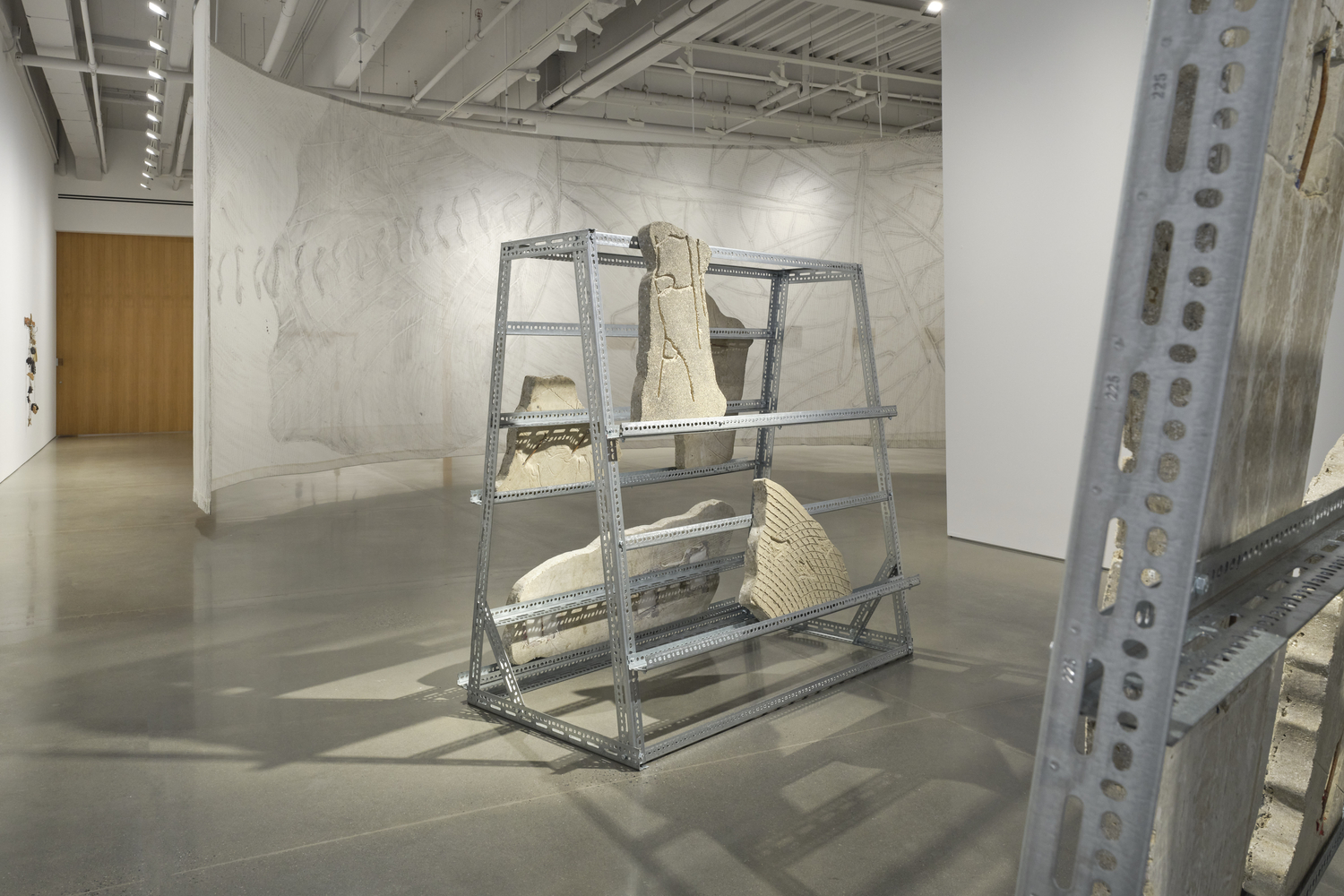
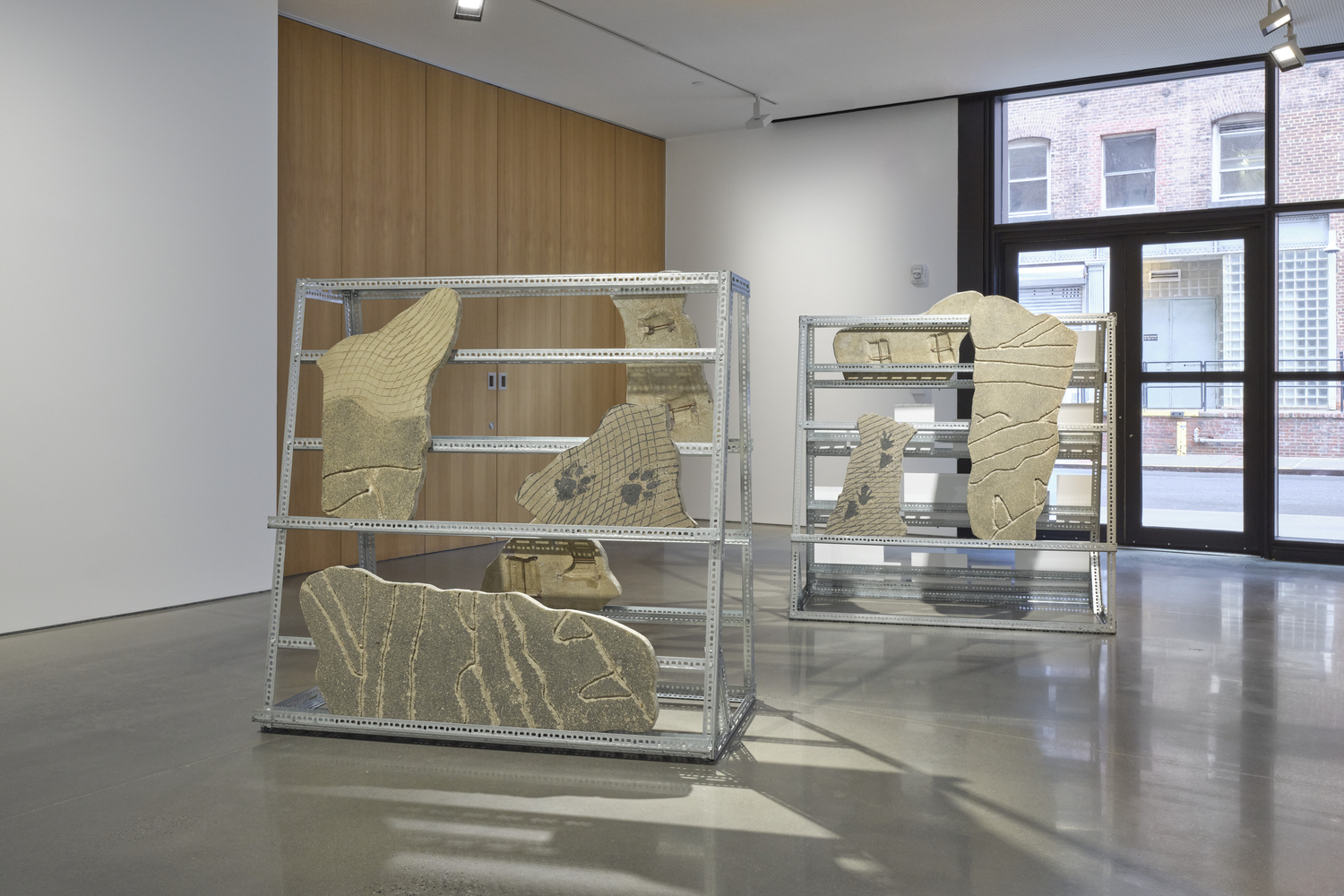
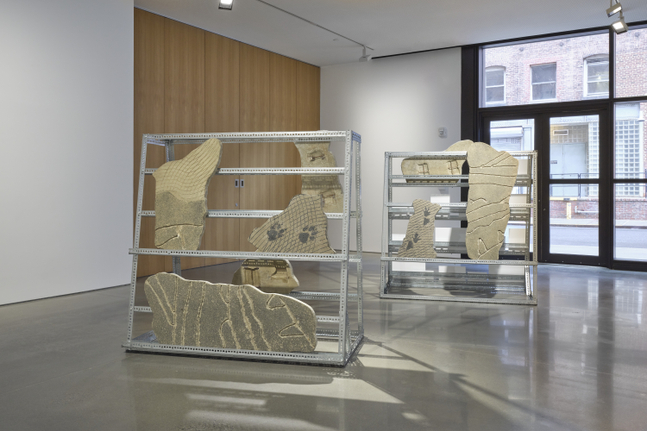
The exhibition concludes with a selection of concrete slabs poured on site in Los Angeles. Produced through the same brushing techniques as the previous ceramic works, these works record organic lines, rope patterns, and animal footprints. Installed on utilitarian metal shelving alongside photographic documentation of the plaza’s production, they form an index of gestures, materials, and collaborations from the construction process.
Together, these works bring the plaza project into the gallery, reframing its construction as a process of collective inscription. Rather than presenting the public artwork as a fixed outcome, Serpent Disappearances foregrounds the labor, experimentation, and material negotiations that shaped it. In doing so, the exhibition extends Castillo Deball’s ongoing inquiry into how histories move across geographeis—becoming embedded in new sites, new contexts, and new forms.
installation view of mariana castillo deball: serpent disappearances, kurimanzutto, new york, 2026. photo: zach hyman
installation view of mariana castillo deball: serpent disappearances, kurimanzutto, new york, 2026. photo: zach hyman
installation view of mariana castillo deball: serpent disappearances, kurimanzutto, new york, 2026. photo: zach hyman
installation view of mariana castillo deball: serpent disappearances, kurimanzutto, new york, 2026. photo: zach hyman
installation view of mariana castillo deball: serpent disappearances, kurimanzutto, new york, 2026. photo: zach hyman
installation view of mariana castillo deball: serpent disappearances, kurimanzutto, new york, 2026. photo: zach hyman
installation view of mariana castillo deball: serpent disappearances, kurimanzutto, new york, 2026. photo: zach hyman
installation view of mariana castillo deball: serpent disappearances, kurimanzutto, new york, 2026. photo: zach hyman
installation view of mariana castillo deball: serpent disappearances, kurimanzutto, new york, 2026. photo: zach hyman
installation view of mariana castillo deball: serpent disappearances, kurimanzutto, new york, 2026. photo: zach hyman
installation view of mariana castillo deball: serpent disappearances, kurimanzutto, new york, 2026. photo: zach hyman
installation view of mariana castillo deball: serpent disappearances, kurimanzutto, new york, 2026. photo: zach hyman
read the full article on the guardian
read the full interview on apollo magazine
"Amarantus" is the first retrospective in Mexico of the work of Mariana Castillo Deball at MUAC, UNAM.
Read the full review on Mariana Castillo Deball's exhibition "Amarantus" at MGK Siegen by Stephanie Bailey for Ocula magazine
The exhibition at MGKSiegen is the first solo presentation in Germany covering the Mexican artist's complete œuvre. Works from the last 15 years are being presented in 14 rooms.
Deball’s exhibition focuses on sharing the stories of a number of little-known female anthropologists and indigenous storytellers and makers.
Watch the conversation between Mariana Castillo Deball and curator Tobias Ostrander where they talk about her project in 2011 Este desorden construido autoriza geológicas sorpresas a la memoria mas abandonada.
Listen to the audios by Mariana Castillo Deball and Carlos Sandoval created from the recordings of the actions carried out with local collaborators of Milpa Alta.
Watch the conversation published by America's Society with Mariana Castillo Deball where she talks about her work from her studio in Berlin during Covid-19 quarantine.
For her project at MUMA, Castillo Deball has focused on Nilpena, an area north of Adelaide, which is home to one of the most well-preserved ediacara fossil sites in the world.
This solo exhibition presents three distinct kinds of work—and worlds—created by Castillo Deball in the past decade. They strike a balance between material folds and unfolding ideas, whereby multiple senses of time are experienced in the blank spaces of a drawing, in the negative space of sculpture, or in the wrinkles of a surface. For years, Castillo Deball’s work has consistently manifested the ways in which the passage of time is illustrated, organized, and expressed in nature as much as in artifice.
Deball gives the title Petlacoatl to his first individual exhibition in Chicago, the title comes from taking up the Nahua word that means "mat woven with snakes that point in all directions".
The exhibition gathers colonial codices from the Biblioteca Nacional de Antropología e Historia (National Library of Anthropology and History) and map-paintings from the Archivo General de la Nación (General Archive of the Nation), together with the encyclopedic project known as the Florentine Codex housed in the Biblioteca Medicea Laurenziana, in Florence, Italy. Together, the documents examine the indigenous point of view on the conquest and the processes of survival, negotiation, and creation of a new land.
For her exhibition at the SCAD Museum of Art, Castillo Deball presents the most recent iteration of the project "To-Day," which combines historical research about a specific site and a physical form that contains this research, which the artist calls a "fictional character."
The starting point for the artist’s work is her enthusiasm for fossils and their association with lithography as well as the change in evolutionary research during technical development. Mariana Castillo Deball’s Pleasures of Association, and Poissons, such as Love thematizes the rivalry between different techniques for creating scientific »facts«, each showing a different view of Evolution.